Walk into any water tank showroom in Pakistan and you'll hear "2-layer," "3-layer," "5-layer," and "insulated" thrown around as if the difference is obvious. It isn't, and the price gaps between these tiers are large enough that guessing wrong costs real money either way, overpaying for protection you didn't need, or underpaying for a tank that fails sooner than it should.
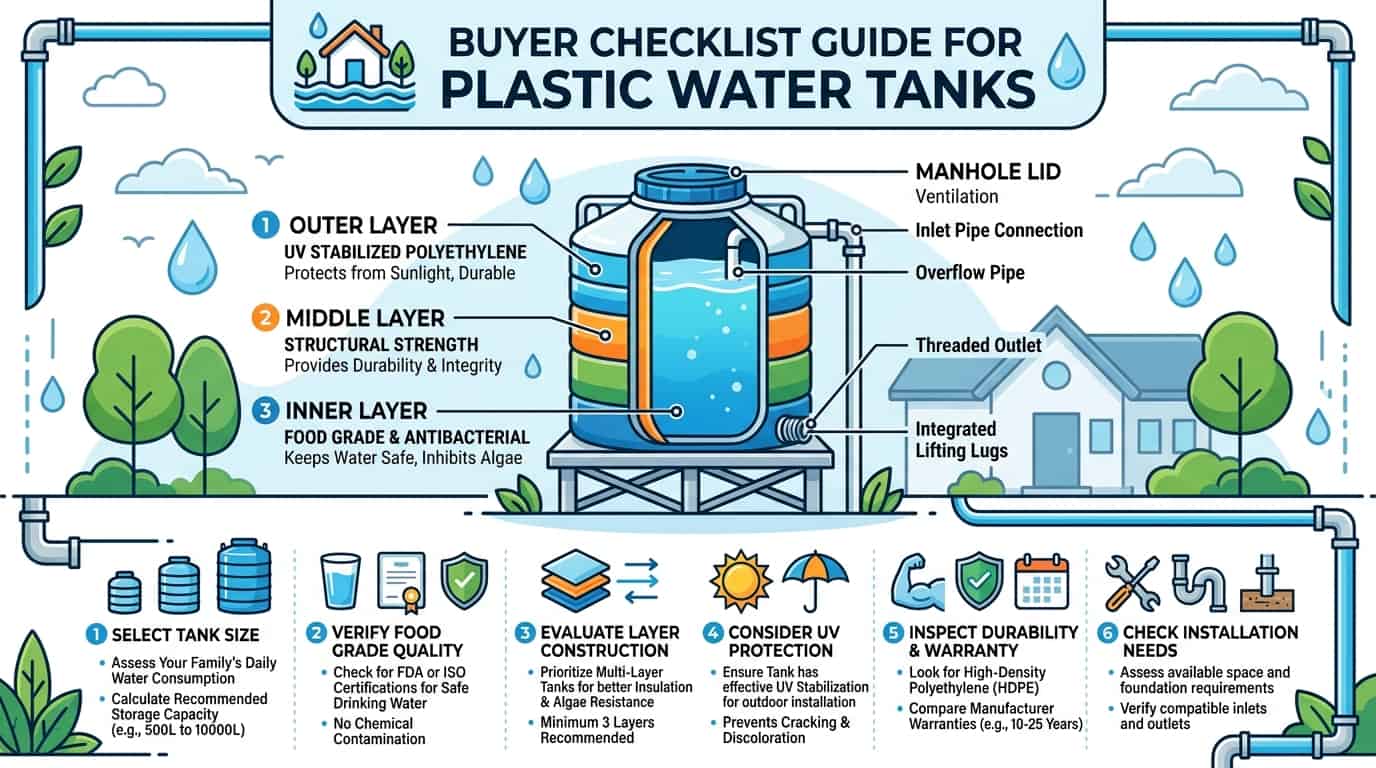
Already checked our buying checklist? See our Plastic Water Tank Buying Checklist for the broader factors beyond layer count.
What Each Layer Tier Actually Means
2-Layer (Sometimes Called "Medium")
The entry point for branded tanks, a basic construction typically backed by a 5-year manufacturer warranty. This tier is genuinely adequate for many households, particularly where the tank isn't in the most extreme direct-sun position on the roof.
3-Layer (Often Marketed as "Heavy" or "PLUS")
Adds a layer of protection over the 2-layer build, typically backed by a 10-year manufacturer warranty. This is the tier most quality-conscious Pakistani buyers land on, a genuine step up in durability for a moderate price increase, without reaching premium pricing.
Roto-moulded seamless construction is a feature worth specifically checking for at this tier and above, it means no joints in the tank body, which means no joint-related leak points, a real durability advantage over molded tanks with visible seams.
5-Layer (Premium Tier)
The top tier from major Pakistani manufacturers, built entirely of virgin polymer, specifically virgin LLDPE (Linear Low-Density Polyethylene), a fresh-made plastic resin rather than any recycled content. This construction produces tanks that are more dynamic, strong, and durable, with a longer lifespan than lower tiers.
What you're actually paying extra for at this tier: guaranteed virgin plastic (no recycled content risk), maximum UV resistance, and typically the longest warranty period offered by that manufacturer.
Insulated Tank (A Different Category Entirely)
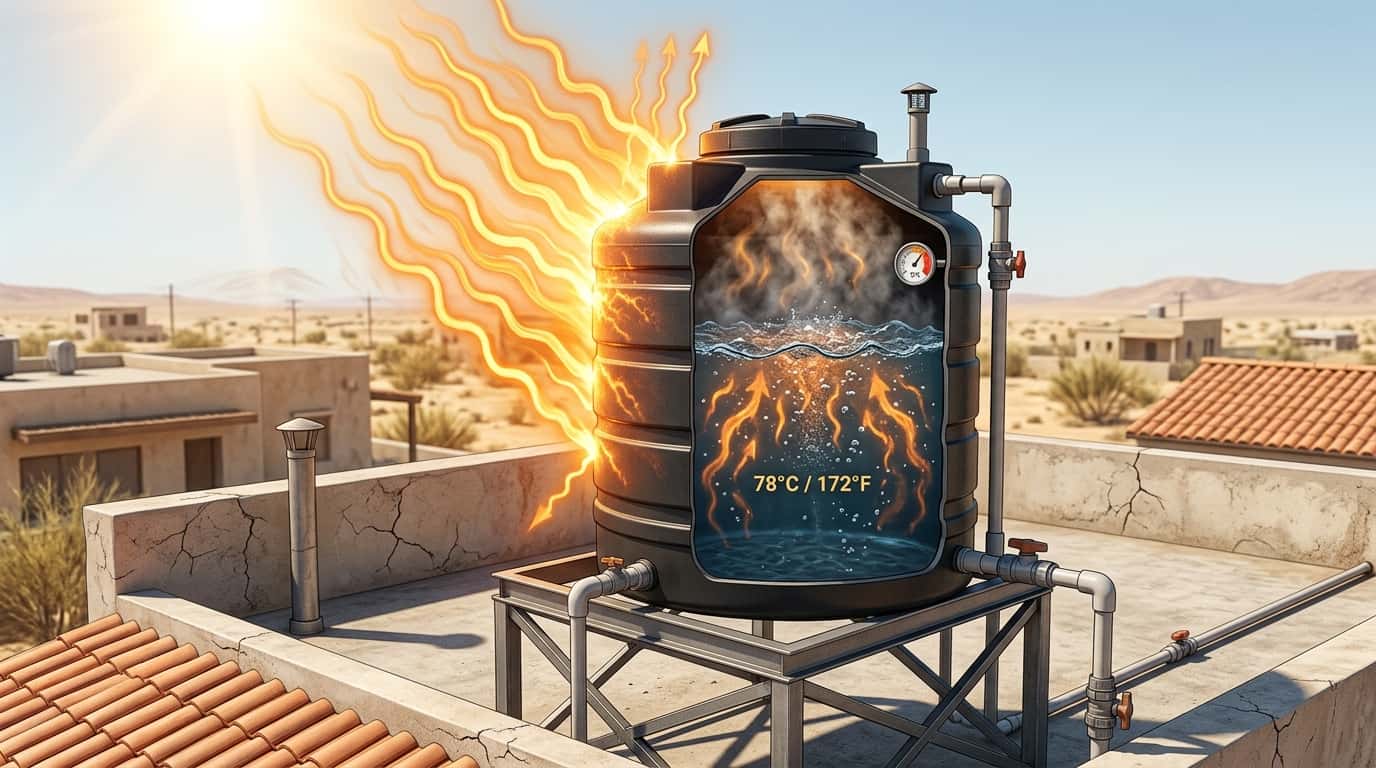
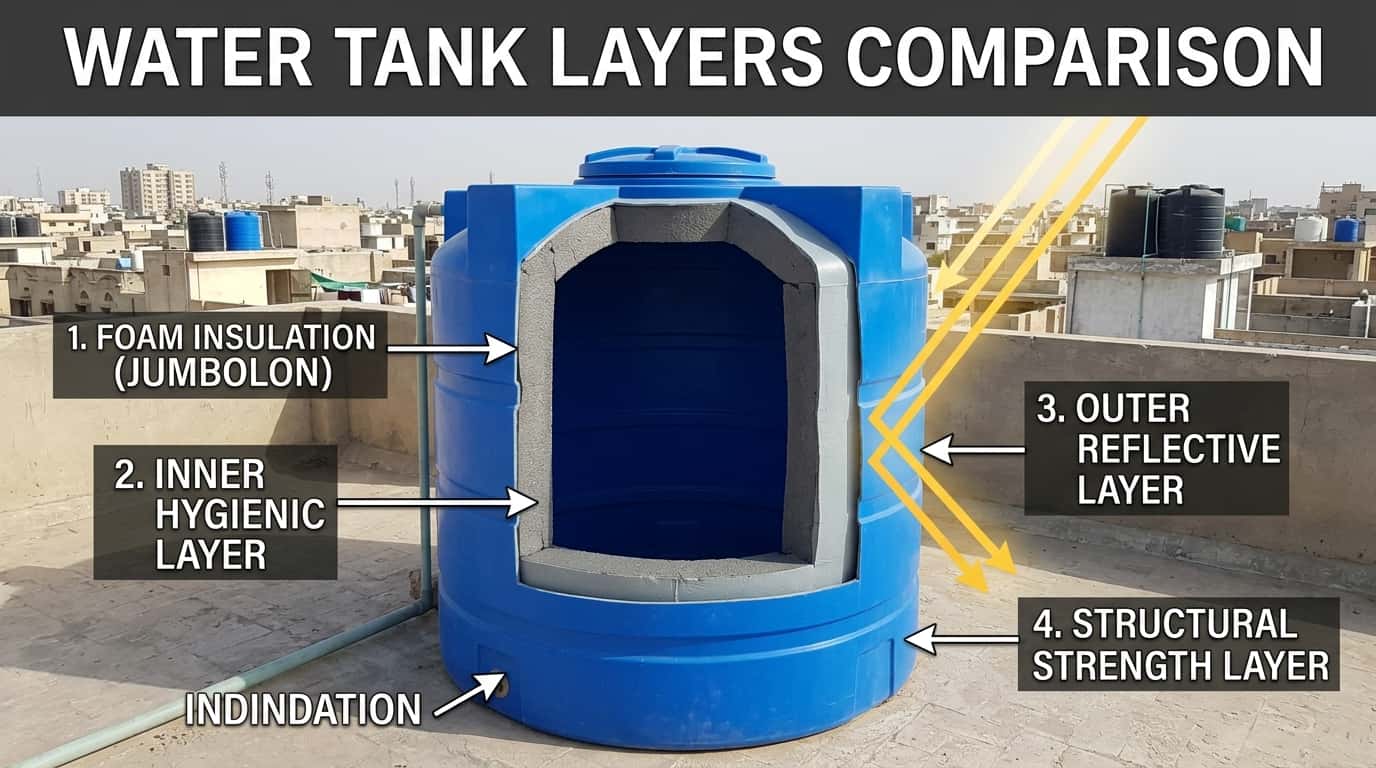
This is worth understanding as genuinely separate from the layer-count question above. A standard 5-layer tank, even at premium quality, is still built primarily for durability, food safety, and UV resistance, not specifically to manage internal water temperature. An insulated tank adds a dedicated thermal barrier layer specifically to reduce heat transfer, addressing the "why is my tap water scalding hot" problem that layer count alone doesn't solve.
The key distinction: more layers generally means more durability and UV protection. Insulation specifically means better temperature control. A 5-layer non-insulated tank can still get just as hot inside as a basic tank on a bad summer day, the extra layers protect the tank's structure and the water's safety, not its temperature.
Price Comparison, What the Upgrade Actually Costs
| Tier | Typical Warranty | Relative Price Position |
|---|---|---|
| 2-layer / Medium | 5 years | Baseline |
| 3-layer / Heavy / PLUS | 10 years | Moderate premium over 2-layer |
| 5-layer / Premium (virgin polymer) | 10 years, top brand confidence | Highest of the standard tiers |
| Insulated (any layer tier) | Varies by manufacturer | 20-35% premium over an equivalent non-insulated tank of the same layer tier |
For current exact pricing on insulated tanks specifically, see our Water Tank Insulation guide.
Is the Upgrade From 3-Layer to 5-Layer Worth It?
Worth it if: your tank sits in an exceptionally exposed rooftop position with no shade at all, you're buying for a household where tank failure would be genuinely disruptive (no easy backup water access), or you simply want the manufacturer's top-confidence product and the price difference is a small fraction of your overall budget.
Probably not necessary if: your tank has any partial shade, you're replacing a tank that lasted reasonably well at the 3-layer tier already, or budget is a genuine constraint, a quality 3-layer tank from a reputable brand is a perfectly sound choice for most standard Pakistani households.
Is Insulation Worth Adding on Top of a Good Layer Tier?
This depends entirely on what problem you're actually trying to solve, and it's worth being honest with yourself about which one it is:
If your concern is tank durability, leaks, or water safety, layer tier (2/3/5) is the relevant spec. Insulation doesn't meaningfully change durability outcomes.
If your concern is scalding-hot tap water in summer, insulation is the relevant spec, and a basic 3-layer insulated tank will solve this problem better than a premium 5-layer non-insulated tank, since layer count doesn't address temperature.
Have questions about this?
Chat with us on WhatsApp. We usually reply within minutes.
If both concerns apply, an insulated tank at the 3-layer tier (rather than paying extra for 5-layer non-insulated) is often the more sensible budget allocation, since it directly addresses both durability (a solid mid-premium tier) and the temperature problem, rather than over-investing in layer count while leaving the heat issue unsolved.
See our Why Does Your Rooftop Water Tank Get So Hot? guide for the full explanation of why layer count alone doesn't fix the temperature problem.
Practical Buying Recommendation
For most Pakistani households: a 3-layer, roto-moulded, food-grade tank from a recognized brand (10-year warranty tier) represents the genuine sweet spot of durability and value. Add insulation specifically if hot tap water is a real problem in your household, rather than defaulting to 5-layer construction as a proxy for "better", the two upgrades solve different problems, and understanding which one you actually need saves money either way.
Complete Your Water Tank Research
- Water Tank Insulation, Full Pricing Guide
- Plastic Water Tank Buying Checklist
- Why Does Your Rooftop Water Tank Get So Hot?
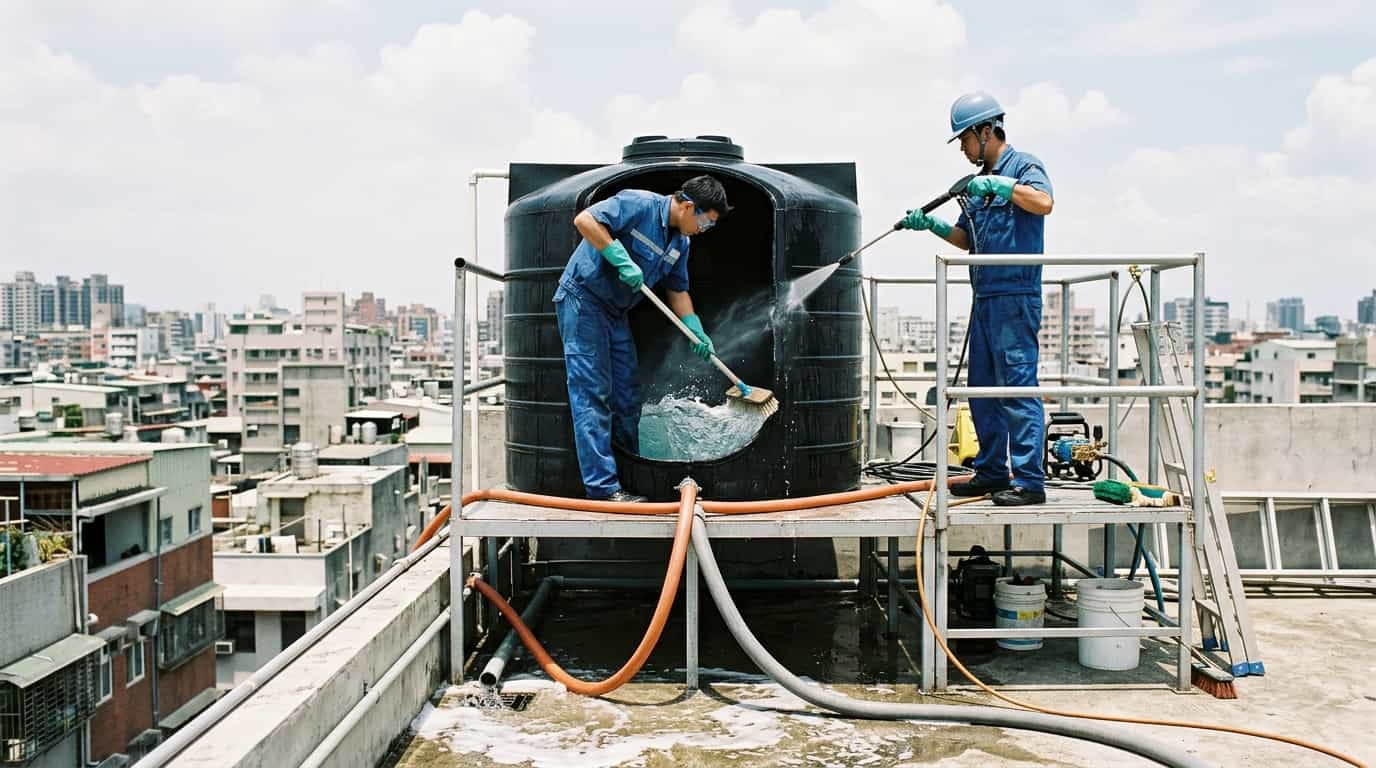
- Water Tank Cleaning in Pakistan
- Insulation Services, Full Range
Frequently Asked Questions
Q1: What is the difference between a 3-layer and 5-layer water tank? A 3-layer tank (often marketed as "Heavy" or "PLUS") typically carries a 10-year warranty and offers a genuine durability step up from basic 2-layer construction. A 5-layer tank is the premium tier, built entirely of virgin polymer (no recycled plastic content), offering maximum UV resistance and typically the manufacturer's top warranty confidence. The 5-layer upgrade costs more but delivers meaningfully longer expected lifespan, particularly for tanks in exceptionally exposed rooftop positions.
Q2: Does more layers mean the water stays cooler? Not necessarily, layer count primarily affects durability, UV resistance, and structural integrity, not water temperature specifically. Even a premium 5-layer tank without dedicated insulation can still reach the same high internal temperatures as a basic tank during peak summer sun exposure. If temperature control is your actual goal, look specifically for an insulated tank rather than assuming more layers solves the heat problem. (Ahrefs SV: relates to "insulated water tank price in pakistan" 10/mo)
Q3: What is the Dura water tank price in Pakistan? Dura/Dura Max water tank pricing varies significantly by layer tier and size, the Medium (2-layer, 5-year warranty) tier is priced lower than the Heavy/PLUS (3-layer, 10-year warranty) tier, with the premium 5-layer virgin-polymer tier priced highest. Overall Pakistani water tank pricing across brands typically ranges from roughly PKR 3,500 for very small tanks to PKR 46,000+ for large premium tanks, with capacity and layer tier both driving the final price. (Ahrefs SV: 90/mo, TP 300)
Q4: Should I buy a 5-layer tank or a 3-layer insulated tank if I can only choose one? This depends on your actual problem. If durability and long-term structural reliability are your priority, 5-layer construction is the stronger choice. If scalding-hot tap water in summer is your actual complaint, a 3-layer insulated tank will solve that specific problem better than a non-insulated 5-layer tank, since insulation, not layer count, addresses temperature. Many households find a 3-layer insulated tank the more sensible budget allocation when both durability and heat are genuine concerns.
Q5: Is roto-moulded construction better than blow-moulded? Roto-moulded (rotational moulding) construction produces a seamless tank body with no joints, meaning no joint-related leak points, a genuine durability advantage over some blow-moulded designs with visible seams. Both methods are used by reputable Pakistani manufacturers, but seamless roto-moulded construction is generally considered the higher-durability option, particularly at the 3-layer tier and above.
Q6: How much more does an insulated water tank cost compared to a standard tank? Insulated tanks typically carry a 20-35% price premium over an equivalent non-insulated tank of the same layer tier, reflecting the added thermal barrier construction. See our Water Tank Insulation guide for current specific pricing across sizes.
Q7: Is virgin polymer really better than recycled plastic for water tanks? Yes, genuinely, virgin polymer (fresh-made plastic resin with no recycled content) produces stronger, more durable tanks with a longer real-world service life compared to tanks made with recycled or lower-grade plastic. This is the primary quality differentiator at the premium 5-layer tier, and it's worth asking sellers directly whether a tank uses virgin or recycled material rather than assuming based on price alone.
Have questions about this?
Chat with us on WhatsApp. We usually reply within minutes.