If you're building your first cold storage facility, a walk-in cooler, a small cold room, a chiller for produce or pharma, the panel-type decision (PUF, PIR, or EPS) can feel like it requires an engineering degree to navigate. It doesn't. Here's the plain-language version of what actually matters for a first-time buyer.
Want the full technical breakdown with pricing? See our Cold Storage Insulation guide.
The Three Options, Explained Simply
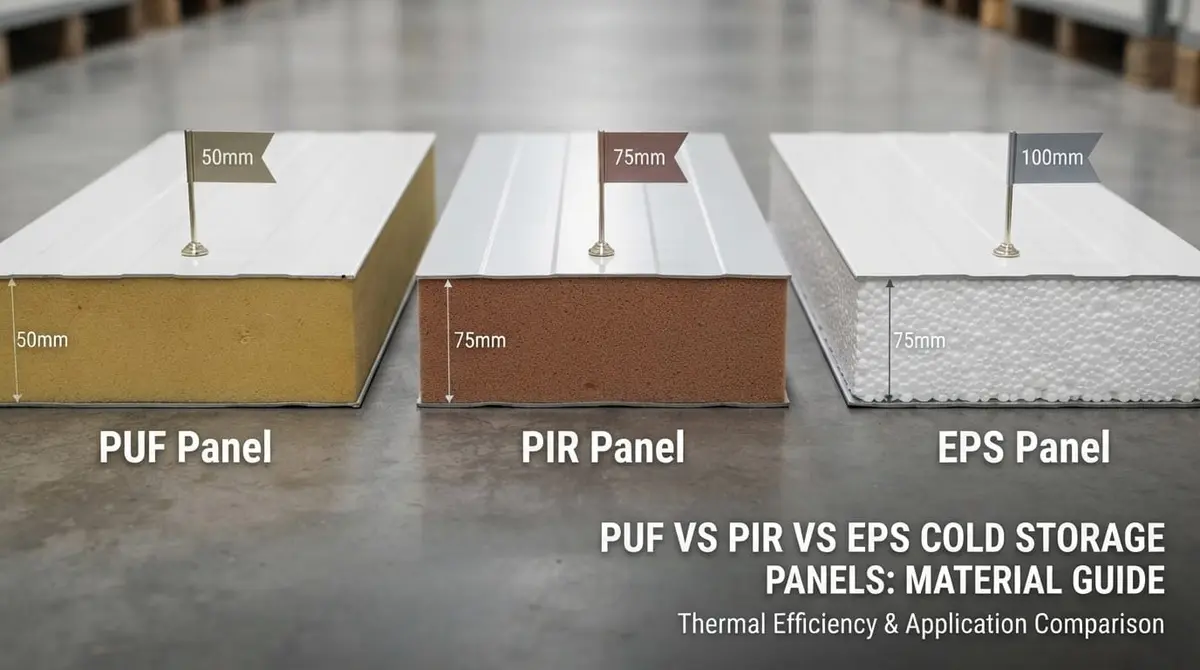
EPS (Expanded Polystyrene), think of this as the same material as basic thermocol sheet, just used in structural sandwich panel form for cold storage construction. It's the cheapest of the three, works fine for less demanding applications, but has real limitations for serious cold storage: less efficient insulation per inch of thickness, and, importantly, poor fire resistance.
PUF (Polyurethane Foam), the middle option. Genuinely better insulation performance than EPS at a moderate price step up, and the standard choice for small-to-medium cold stores like walk-in coolers and freezers.
PIR (Polyisocyanurate), the premium option. Best insulation performance of the three, and critically, meaningfully better fire resistance, a genuine safety consideration for larger commercial cold storage facilities, and increasingly required or preferred for pharmaceutical and export-grade facilities.
The One Question That Should Drive Your Decision
Before comparing prices, ask: what am I actually storing, and what happens if there's a fire?
If you're building a small, low-risk facility, say, a modest walk-in cooler for a local restaurant, EPS's lower fire-safety rating is a genuine but manageable risk, and the cost savings can make sense.
If you're building anything larger, anything commercial-scale, anything storing high-value inventory, or anything where insurance coverage matters, PIR's fire resistance isn't a nice-to-have, it's increasingly the baseline expectation from insurers, regulators, and serious commercial partners.
The Second Question: How Cold, and How Consistently?
Different temperature zones genuinely need different panel thickness, regardless of which panel type (PUF, PIR, or EPS) you choose:
| Your Application | Typical Temperature | Panel Thickness Needed |
|---|---|---|
| Chiller (fruit, veg, dairy) | +2°C to +5°C | Thinner panels sufficient |
| Standard freezer | −18°C to −25°C | Meaningfully thicker |
| Blast freezer (rapid freezing) | −40°C | Thickest panels required |
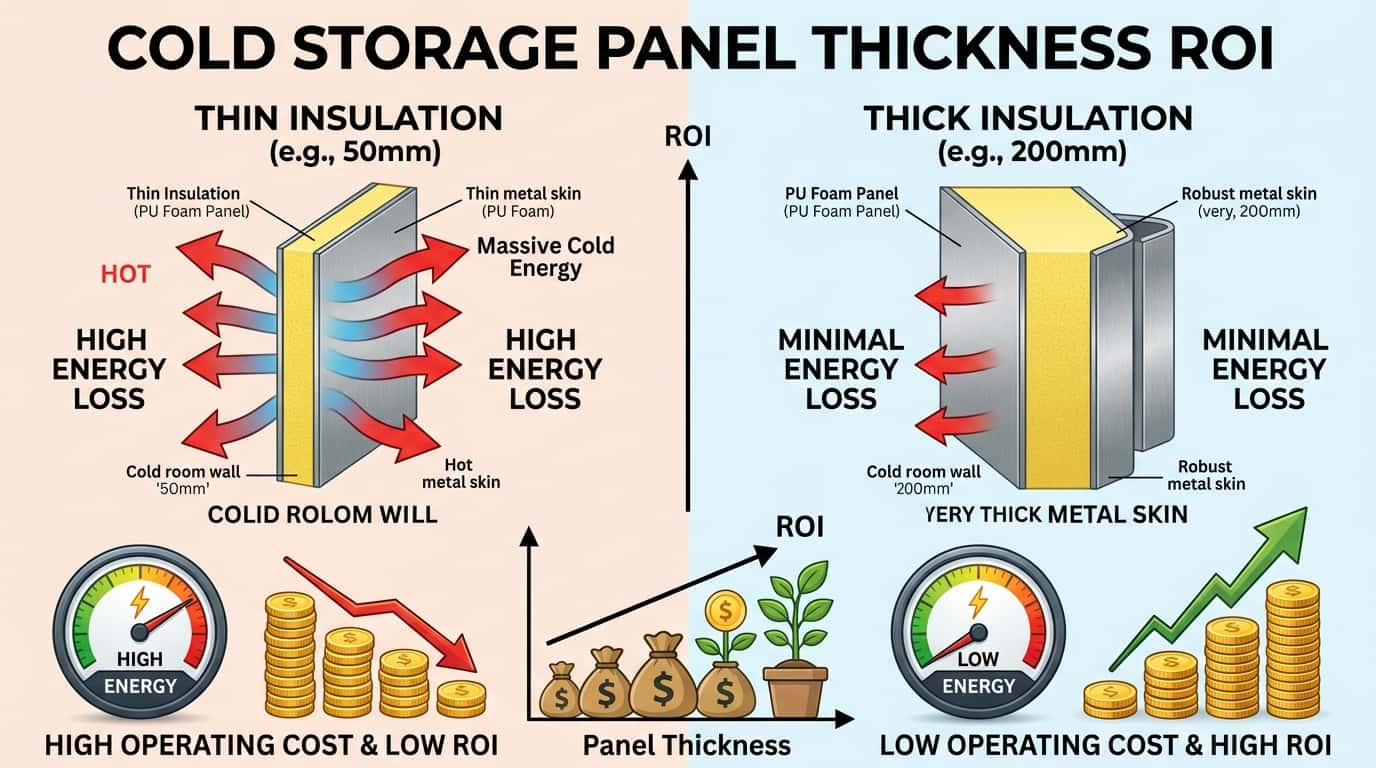
The genuine trap first-time buyers fall into: focusing entirely on panel material type (PUF vs PIR vs EPS) while underspecifying thickness for their actual temperature target. A premium PIR panel at insufficient thickness for a −25°C freezer will still underperform, thickness and material type both matter, and neither substitutes for the other.
A Simple Decision Framework for First-Time Buyers
Choose EPS if: budget is the primary constraint, the facility is small and low-risk, and fire-resistance requirements from your insurer or local regulations are minimal or absent.
Choose PUF if: you want meaningfully better insulation performance than EPS without PIR's full price premium, and you're building a standard-scale walk-in cooler or freezer without unusual fire-safety requirements.
Choose PIR if: you're building anything commercial-scale, need genuine fire-safety compliance, are storing high-value or regulated goods (pharma, export-grade food), or simply want the best available performance and are willing to pay for it.
What First-Time Buyers Consistently Underestimate
Have questions about this?
Chat with us on WhatsApp. We usually reply within minutes.
The electricity cost isn't a footnote, it's often the biggest number over the facility's life. A cold storage facility runs continuously for years; the cumulative electricity cost from running the compressor against inadequate insulation frequently exceeds the original construction cost over the facility's operating lifetime. This is precisely why choosing based on lowest upfront panel cost alone can be a genuinely expensive false economy.
Panel thickness beats "premium material" for actual performance. A thicker EPS panel can sometimes outperform a thinner PIR panel for raw insulation value, even though PIR is the "better" material category, thickness and material type need to be evaluated together, not material type alone treated as the whole decision.
Fire safety isn't just about the panels themselves, it's about your insurance and regulatory standing. Some insurers specifically require PIR-rated construction for coverage above certain facility values, and this requirement is worth checking before construction begins, not after your insurance application gets flagged.
Related Guides
- Cold Storage Insulation, Full Technical Guide
- PU Foam Spray for Cold Storage
- Insulation Services, Full Range
Frequently Asked Questions
Q1: What is the difference between PUF, PIR, and EPS for cold storage? EPS (Expanded Polystyrene) is the most affordable but has lower insulation efficiency and poor fire resistance. PUF (Polyurethane Foam) offers better insulation performance at a moderate price increase, suited to small-to-medium cold stores like walk-in coolers. PIR (Polyisocyanurate) is the premium option with the best insulation performance and meaningfully better fire resistance, standard for larger commercial and pharmaceutical/export-grade facilities.
Q2: Should a first-time cold storage buyer choose based on price alone? No, this is the most common and costly mistake first-time buyers make. Electricity cost from running the compressor against inadequate insulation frequently exceeds the original construction cost over a facility's operating lifetime, making the lowest upfront panel price a potential false economy rather than genuine savings.
Q3: Does panel thickness matter more than panel material type? Both matter together, a thicker EPS panel can sometimes outperform a thinner PIR panel for raw insulation value, even though PIR is generally the better material category. Thickness should be matched to your specific target temperature (chiller, standard freezer, or blast freezer), independent of which material type you choose.
Q4: When is EPS an acceptable choice for cold storage despite its lower fire rating? EPS makes sense for small, low-risk facilities with minimal fire-safety regulatory requirements, a modest walk-in cooler for a local business, for example, where budget constraints are genuine and the fire-safety trade-off is manageable given the facility's small scale and lower stakes.
Q5: Why does fire resistance matter so much for larger cold storage facilities? Beyond the direct safety concern, some insurers specifically require PIR-rated construction for coverage above certain facility values, and regulatory requirements for pharmaceutical or export-grade facilities increasingly expect PIR-level fire resistance as standard. Checking these requirements before construction begins avoids problems with insurance or regulatory approval later.
Q6: What thickness do I need for a standard freezer versus a chiller? Chillers (+2°C to +5°C, for produce or dairy) need meaningfully thinner panels than standard freezers (−18°C to −25°C), which in turn need less thickness than blast freezers (−40°C, for rapid freezing applications). Thickness requirements scale with how cold your target temperature is, regardless of which panel material you choose.
Q7: What is the biggest mistake first-time cold storage buyers make? Focusing entirely on panel material type (PUF vs PIR vs EPS) while underspecifying thickness for their actual temperature target, and choosing based on lowest upfront cost without factoring in the electricity cost implications over the facility's operating life, both material type and thickness matter together, and long-term electricity cost often outweighs the initial panel price difference.
Have questions about this?
Chat with us on WhatsApp. We usually reply within minutes.