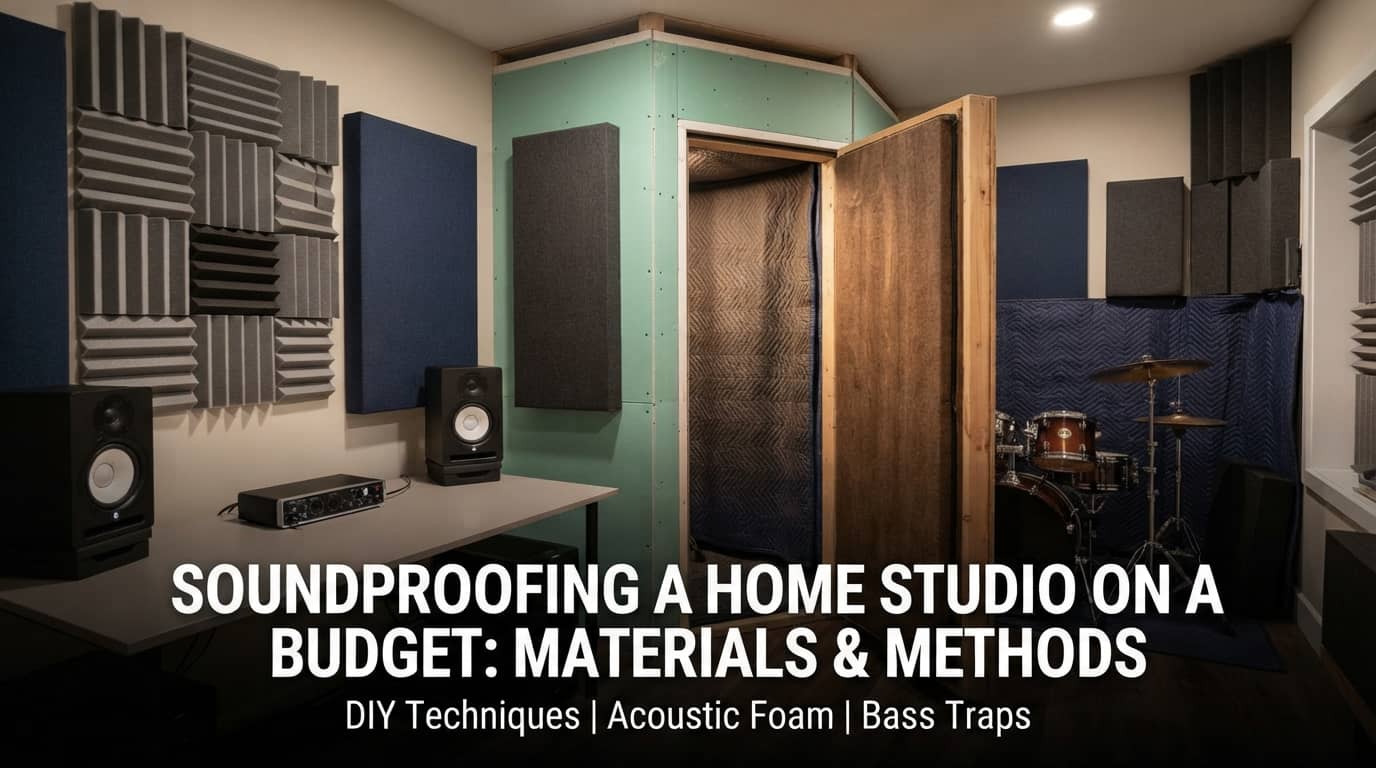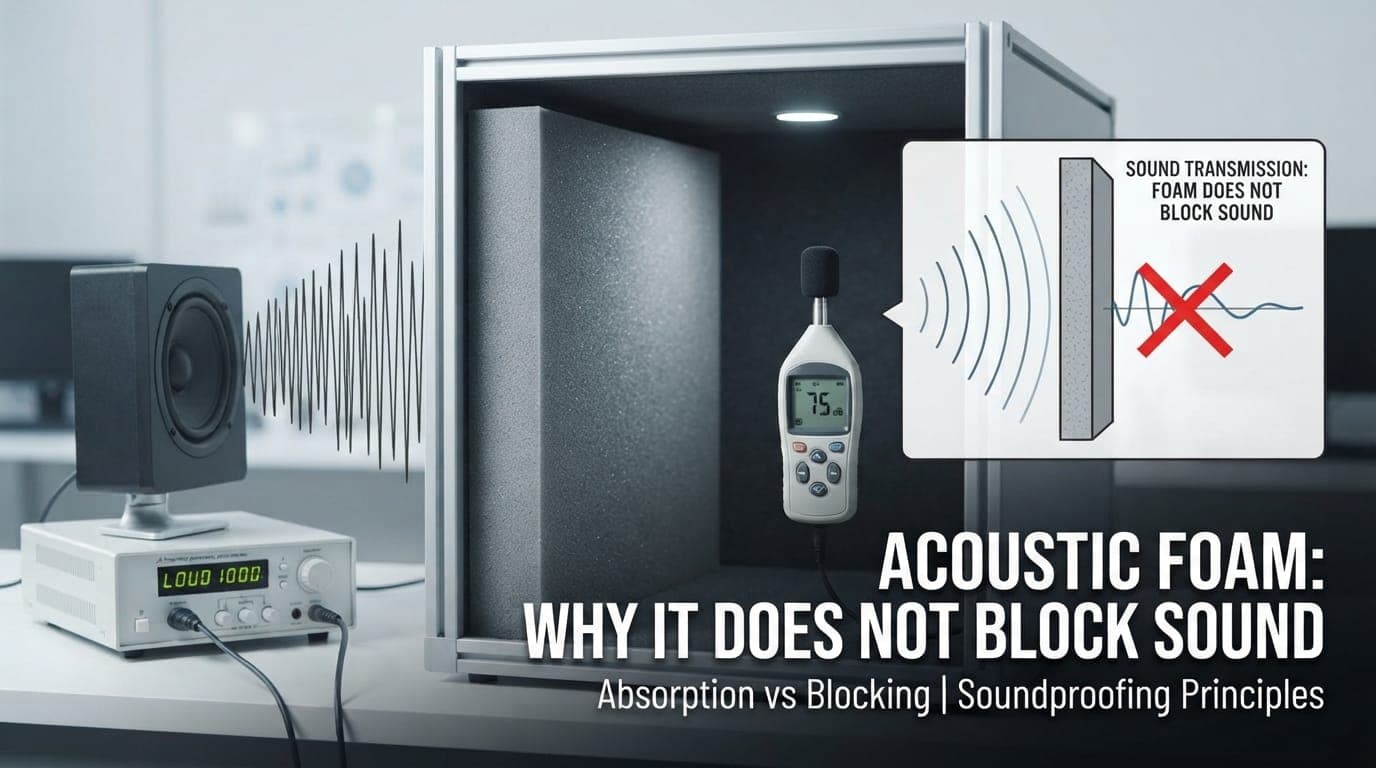
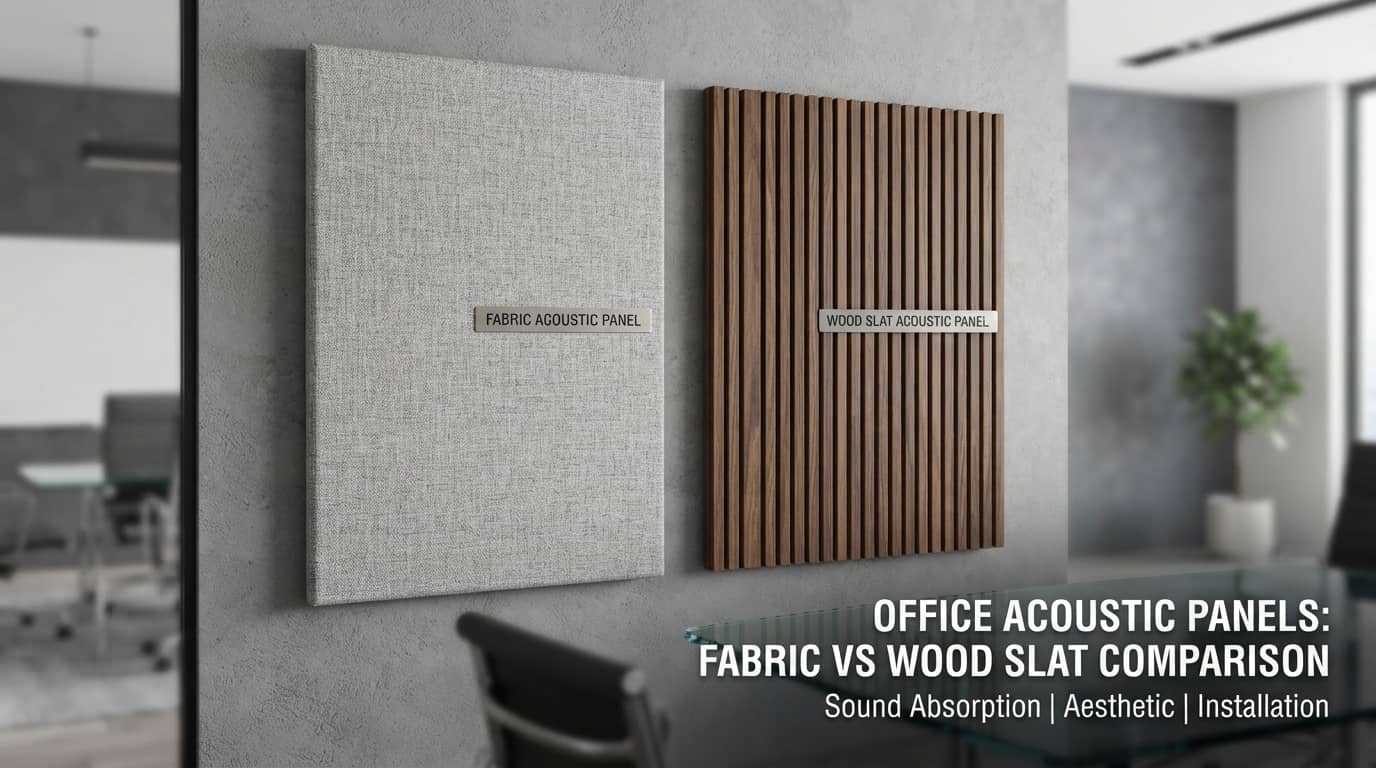
Home studio acoustic treatment prioritizes performance above everything, wedge-pattern foam in bright colours is fine when nobody but you sees the room. An office is a genuinely different design problem: the acoustic treatment needs to work and look appropriate to a professional, client-facing environment. Here's how the three main options actually compare for commercial use.
Not sure acoustic treatment is even what you need? See our acoustic vs soundproofing explanation first.
Foam Panels, Function First, Aesthetics Secondary
What they are: the classic wedge or pyramid-pattern foam tiles, effective at absorbing mid-to-high frequency sound reflections.
For offices specifically: foam works acoustically in a commercial setting exactly as well as it does in a home studio, the physics don't change based on the room's purpose. The consideration is purely visual: standard foam's textured, often colourful appearance reads as "home studio" or "recording booth" rather than "professional office," which matters in client-facing spaces, executive areas, or any environment where visual polish is part of the impression you're managing.
Where foam still makes sense in an office: internal-facing spaces without client visibility, server rooms, back-office areas, internal meeting rooms where function outweighs aesthetic consideration.
Fabric-Wrapped Panels, The Middle Ground
What they are: acoustic core material (often the same foam or mineral wool used in basic panels) wrapped in a fabric covering, giving a smooth, upholstered appearance rather than exposed foam texture.
For offices specifically: this is genuinely the most popular commercial choice for good reason, fabric-wrapped panels deliver comparable acoustic performance to basic foam while looking like an intentional design element rather than equipment. Available in a wide range of colours and even printed/branded fabric options, they can actively contribute to office branding and interior design rather than just being tolerated as necessary acoustic infrastructure.
Where this shines: open-plan offices, conference rooms, and reception areas where the panel needs to blend into or actively enhance a designed interior rather than stand out as visible acoustic equipment.
Perforated Wood Panels, The Premium/Executive Option
What they are: wood panels with small perforations, backed by acoustic fabric or foam, combining genuine wood aesthetics with real sound absorption performance.
For offices specifically: this is the choice for executive offices, boardrooms, and any space where the acoustic solution needs to read as premium interior design rather than a functional add-on. The wood surface provides warmth and sophistication that neither foam nor fabric options can match visually, while the perforation pattern maintains genuine acoustic function.
The trade-off: meaningfully higher cost than foam or fabric-wrapped options, which is why this tier is generally reserved for the specific spaces where the visual investment is justified, executive cabins, formal boardrooms, high-visibility reception areas, rather than applied throughout an entire office.
Comparison at a Glance
| Factor | Foam | Fabric-Wrapped | Perforated Wood |
|---|---|---|---|
| Acoustic performance | Strong | Comparable to foam | Good, slightly less absorptive per sq ft |
| Professional appearance | Low, reads as studio equipment | Good, looks designed | Excellent, reads as premium finish |
| Cost | Lowest | Mid-range | Highest |
| Colour/branding flexibility | Limited | High, wide fabric options | Limited to wood tones/finishes |
| Best office application | Back-office, internal spaces | Open-plan offices, conference rooms | Executive offices, boardrooms |
Have questions about this?
Chat with us on WhatsApp. We usually reply within minutes.
A Practical Approach for Mixed-Use Offices
Most real offices don't need to choose just one option throughout, a genuinely practical approach uses different panel types for different zones based on visibility and purpose:
Back-office and internal spaces: foam, prioritizing cost-efficiency where visual impression matters less Open-plan work areas and conference rooms: fabric-wrapped, balancing cost and professional appearance across the largest treated area Executive offices and client-facing boardrooms: perforated wood, where the premium visual investment is genuinely justified by who sees the space
This tiered approach delivers appropriate acoustic performance throughout the office while concentrating the higher design/cost tier only where it's genuinely warranted.
Related Guides
- Soundproofing, Full Product Range
- Acoustic Foam Doesn't Block Sound
- How to Soundproof a Home Studio on a Budget
Frequently Asked Questions
Q1: Which acoustic panel type is best for an office, foam, fabric, or wood? It depends on the specific space within your office. Foam works well for internal, non-client-facing areas where cost matters more than appearance. Fabric-wrapped panels are the most popular general-purpose commercial choice, balancing performance and professional appearance. Perforated wood panels suit executive offices and boardrooms where premium visual impression justifies the higher cost.
Q2: Do fabric-wrapped acoustic panels perform as well as plain foam panels? Yes, generally comparable, fabric-wrapped panels often use the same core acoustic material (foam or mineral wool) as basic foam panels, simply covered in fabric for a more polished appearance. The acoustic performance difference is minimal; the main distinction is visual presentation appropriate for professional, client-facing spaces.
Q3: Why do perforated wood acoustic panels cost more than foam or fabric options? Wood panels combine genuine wood material costs with the manufacturing process needed to create the perforation pattern while maintaining structural integrity and acoustic backing, a more complex construction than simple foam or fabric-wrapped panels. This cost is generally justified for executive offices and boardrooms where the premium aesthetic genuinely matters to the space's purpose.
Q4: Can I use different acoustic panel types in different parts of the same office? Yes, and this is actually the practical recommendation for most offices, using foam in back-office/internal spaces, fabric-wrapped panels in open-plan and conference areas, and perforated wood in executive offices and client-facing boardrooms. This tiered approach matches cost and appearance to each zone's actual visibility and purpose.
Q5: Are fabric-wrapped acoustic panels available in different colours for office branding? Yes, fabric-wrapped panels are available in a wide range of colours, and some suppliers offer printed or branded fabric options, allowing the acoustic treatment to actively contribute to office branding and interior design rather than simply being tolerated as necessary infrastructure.
Q6: Is foam ever appropriate for a professional office environment? Yes, specifically in internal-facing spaces without client visibility, server rooms, back-office areas, or internal meeting rooms where function outweighs visual consideration. For client-facing or executive spaces, fabric-wrapped or wood options are generally more appropriate given the professional impression these spaces need to maintain.
Q7: What acoustic panel option gives the best balance of cost and professional appearance for a mid-size office? Fabric-wrapped panels typically offer the best overall balance for most mid-size commercial offices, comparable acoustic performance to foam at a moderate cost premium, with a genuinely more professional appearance suited to open-plan work areas, conference rooms, and general office use where premium wood panels aren't necessary throughout.
Have questions about this?
Chat with us on WhatsApp. We usually reply within minutes.