This is one of the most common and costly misunderstandings in home and office acoustic treatment: buying acoustic foam panels expecting them to stop noise from traveling between rooms, then being genuinely surprised when the neighbor's TV, the traffic outside, or the conversation in the next room comes through exactly as loudly as before. The foam isn't defective, it was never designed to do the job you bought it for.
Ready to solve your actual problem? See our Soundproofing guide for the full product range.
The Core Distinction: Absorption vs. Blocking
Acoustic treatment (foam, fabric panels) absorbs sound reflections inside a room, reducing echo and reverberation to make the room sound clearer and less "boomy." Think of it as improving how a room sounds to someone already inside it, better for recording, calls, and speech clarity within that space.
Soundproofing blocks sound from passing between spaces, stopping noise from entering or leaving a room. This requires fundamentally different physics: mass, density, and sealed construction, not surface absorption.
These solve genuinely different problems, and a product built for one doesn't meaningfully help with the other, regardless of how much foam you install.
Why Acoustic Foam Specifically Doesn't Block Sound
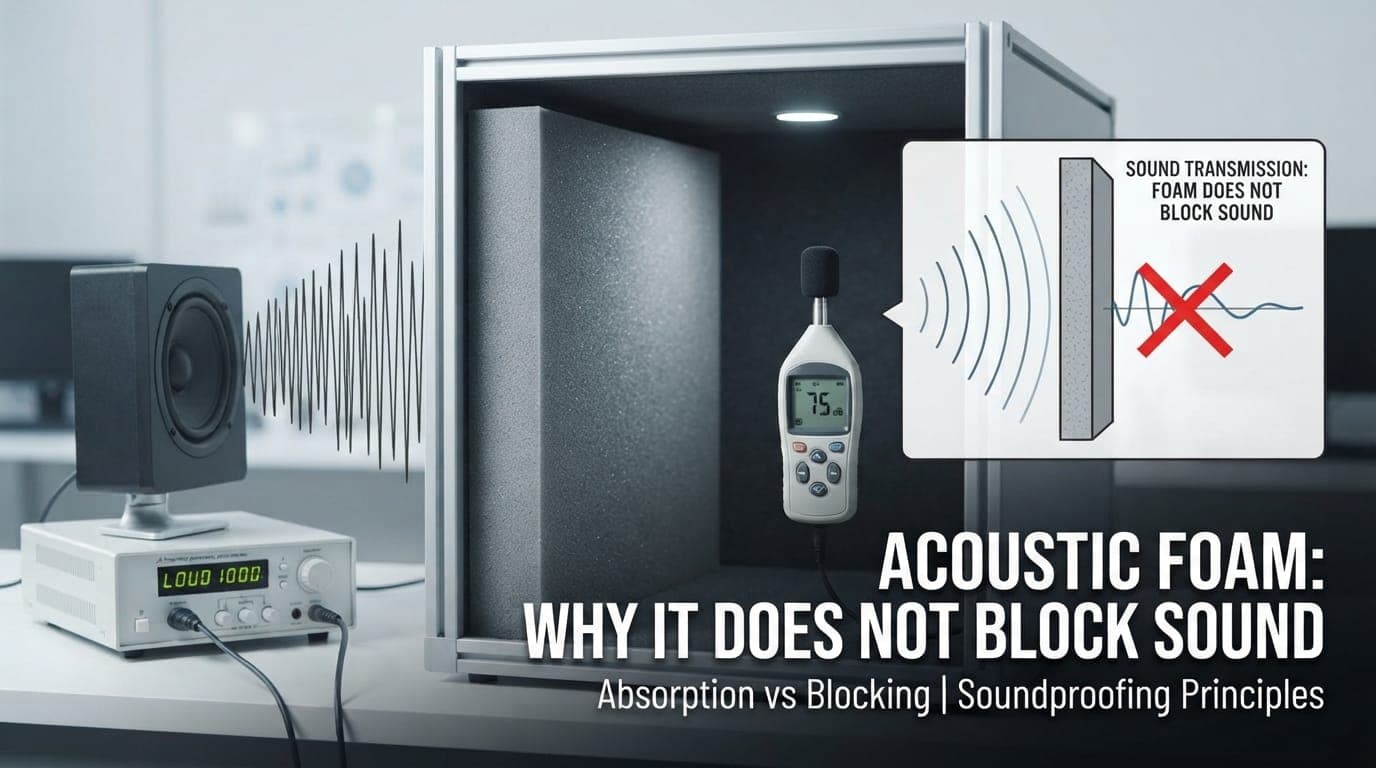
Acoustic foam works by absorbing sound waves that hit it, converting some of that sound energy into a tiny amount of heat through friction within the foam's open-cell structure, this reduces how much sound reflects back into the room, improving clarity and reducing echo. But sound traveling through a wall to the next room isn't primarily a reflection problem, it's a transmission problem, where sound energy passes through the solid wall structure itself, largely bypassing whatever's mounted on the surface.
Foam is lightweight and porous by design (that's precisely what makes it good at absorption), but that same lightweight, porous structure means it does almost nothing to block the mass-driven sound transmission happening through the wall behind it.
What Actually Blocks Sound Transmission
Mass. Denser, heavier materials block sound transmission more effectively than light materials, this is a fundamental acoustic principle (sometimes called "mass law"). Mass-loaded vinyl, dense insulation within a wall cavity, or additional layers of drywall all work by adding mass that sound has a harder time vibrating through.
Decoupling. Physically separating two sides of a wall or ceiling structure (so vibration in one side doesn't directly transfer to the other) meaningfully reduces sound transmission, this is why professional studio construction often uses techniques like staggered stud walls or resilient channels rather than a single solid wall structure.
Sealing air gaps. Sound travels easily through even small gaps, around doors, windows, electrical outlets, and construction seams. Weatherstripping, door sweeps, and acoustic sealant at these gap points often makes a bigger practical difference than any amount of wall treatment, since these gaps are frequently the actual weak points letting sound through.
Genuine mass-based wall/ceiling construction. For serious sound isolation needs (a home studio, a room needing real privacy from a busy household), a properly built double-wall or mass-loaded assembly is what actually stops transmission, this is a construction project, not a product you mount on an existing wall.
So When Is Acoustic Foam the Right Purchase?
Acoustic foam is genuinely the right choice when your goal is:
- Reducing echo/reverberation in a room for better speech clarity, video calls, or recording quality
- Improving how a space sounds to people inside it, not stopping sound from reaching people outside it
- Home studio or podcast recording where flutter echo and internal reflections are the actual audio-quality problem you're trying to solve
Have questions about this?
Chat with us on WhatsApp. We usually reply within minutes.
If your actual complaint is "I can hear my neighbor" or "sound from my room bothers other people in the house," foam alone won't meaningfully fix it, you need the mass/sealing/decoupling approach covered above instead.
The Honest Combined Reality
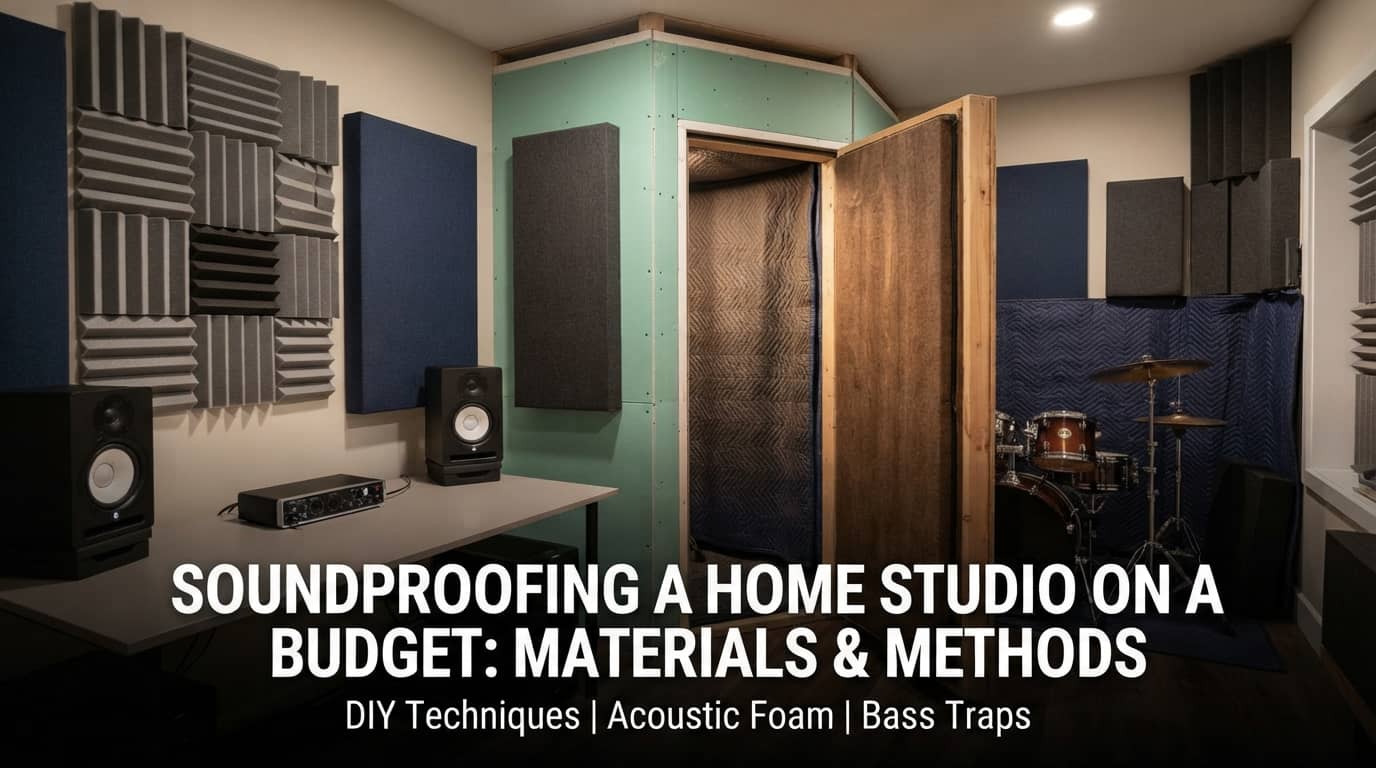
Most real rooms benefit from thinking about these as two separate, sometimes-combined projects: soundproofing addresses whether sound crosses between spaces, acoustic treatment addresses how the room sounds once you're inside it. A serious home studio build often needs both, soundproofing to keep the room's sound in (and outside noise out), then acoustic treatment inside that soundproofed shell to make the recorded sound itself clear and controlled.
Related Guides
- Soundproofing, Full Product Range
- How to Soundproof a Home Studio on a Budget
- Insulation Services, Full Range
Frequently Asked Questions
Q1: Does acoustic foam block sound from entering or leaving a room? No, not meaningfully, acoustic foam absorbs sound reflections within a room to reduce echo, but it does almost nothing to block sound transmission through walls, since that requires mass and sealed construction, not surface absorption. This is one of the most common misconceptions in home and office acoustic treatment purchases.
Q2: What's the actual difference between acoustic treatment and soundproofing? Acoustic treatment (foam, fabric panels) absorbs sound reflections inside a room to reduce echo and improve clarity for people already in that space. Soundproofing blocks sound transmission between spaces using mass, density, and sealed construction. They solve genuinely different problems, and a product designed for one doesn't meaningfully help with the other.
Q3: What actually stops sound from traveling between rooms? Mass (dense materials like mass-loaded vinyl or extra drywall layers), decoupling (physically separating wall/ceiling structures so vibration doesn't transfer directly), and sealing air gaps around doors, windows, and outlets, these gaps are frequently the actual weak points letting sound through, sometimes making a bigger difference than wall treatment alone.
Q4: If I want a quieter bedroom facing a busy road, should I buy acoustic foam? No, acoustic foam won't meaningfully reduce outside traffic noise entering your room, since that's a sound transmission problem, not an echo problem. Address door and window seals first (often the biggest gap sources), and consider mass-based solutions (heavy curtains, secondary glazing, or wall treatment with real mass) for genuine noise reduction from outside sources.
Q5: When should I actually buy acoustic foam panels? Acoustic foam is the right purchase when your goal is reducing echo and reverberation within a room, for home studios, podcast recording, video call clarity, or general speech intelligibility in a space. It improves how the room sounds to people inside it, not whether sound escapes to or enters from outside the room.
Q6: Do I need both soundproofing and acoustic treatment for a home studio? Often yes, soundproofing keeps the room's sound contained (and outside noise excluded) using mass and sealed construction, while acoustic treatment inside that soundproofed space controls internal reflections for clear, professional-sounding recordings. Many serious home studio builds genuinely need both, applied for their distinct purposes.
Q7: Why do sellers sometimes market foam panels as "soundproofing"? This is a common terminology looseness in the market rather than deliberate misrepresentation in most cases, "soundproofing panels" is often used informally to describe any acoustic product, including foam that technically only provides sound absorption, not true soundproofing. Always ask specifically what your actual goal is (reduce echo vs. block sound transfer) before purchasing, regardless of how a product is labeled.
Have questions about this?
Chat with us on WhatsApp. We usually reply within minutes.