Every cold storage buyer faces the same tempting shortcut: thinner panels cost less upfront, and the savings show up immediately on the construction quote. What doesn't show up on that quote is the electricity bill you'll be paying every single month for the next 20-25 years, and that's where the real cost comparison actually happens.
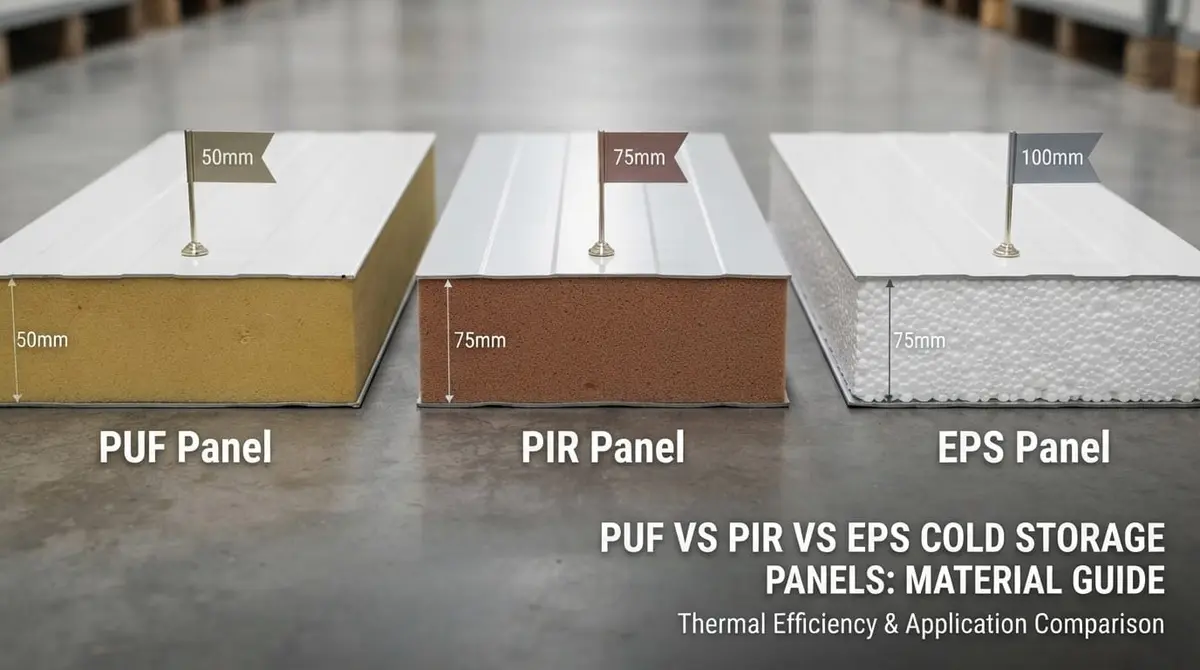
Choosing between panel materials too? See our PUF vs PIR vs EPS guide alongside this thickness analysis.
The Math Most Buyers Never Actually Run
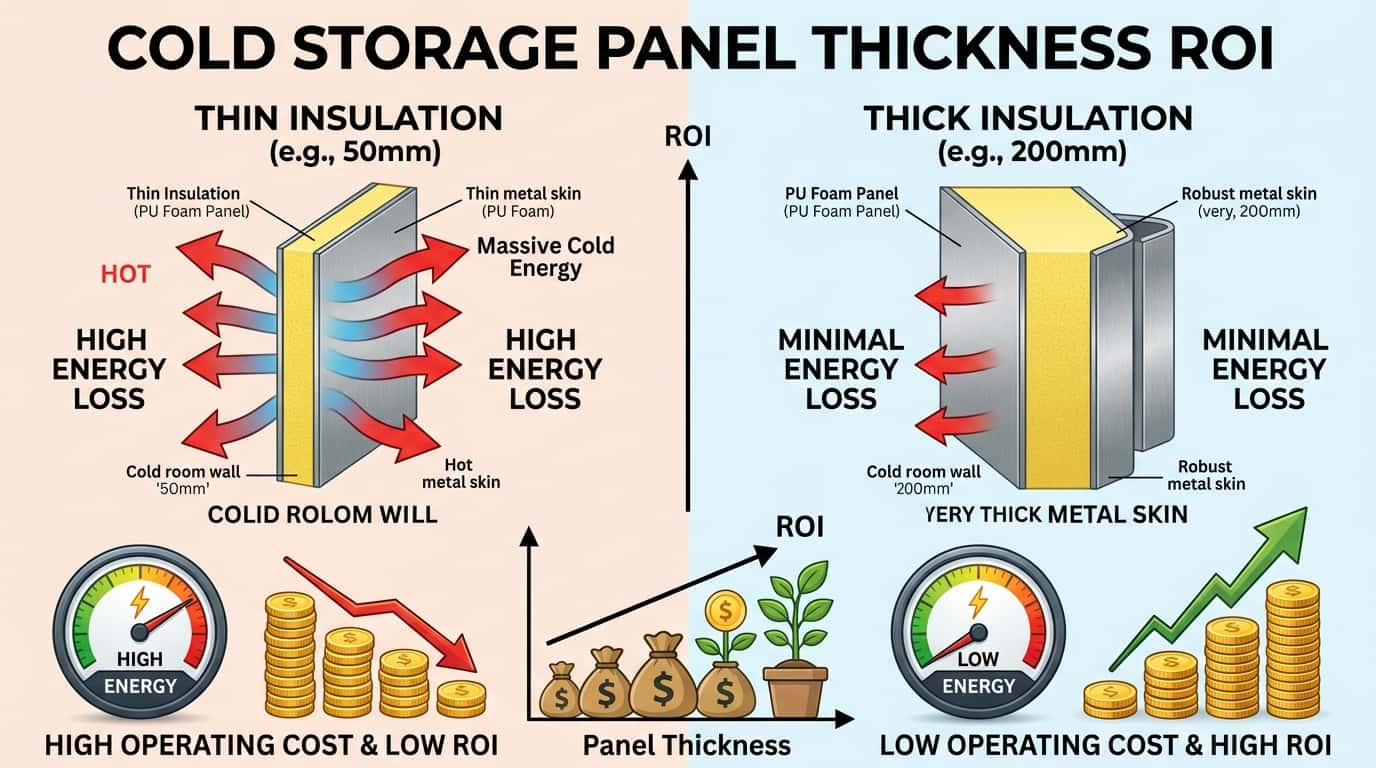
A thinner panel lets more heat leak into your cold storage space, which means your refrigeration compressor has to work harder and longer to maintain temperature, every single day, for the entire operational life of the facility. This isn't a one-time cost difference; it's a recurring cost difference that compounds every month the facility operates.
The scale of this compounding is genuinely significant: electricity cost over a cold storage facility's 25-year operating life routinely exceeds the original capital construction cost by 1.5-2× at typical industrial electricity tariffs. This means the "expensive" panel choice and the "cheap" panel choice aren't actually being compared fairly if you only look at the construction quote, the real total cost includes an electricity bill that's often larger than the construction cost itself.
A Simple Way to Think About It
Imagine two identical cold storage facilities, built at the same time, storing the same goods, one with 80mm panels, one with 120mm panels. The 120mm facility costs more to build. But the 80mm facility's compressor runs harder every single day for the facility's entire operating life, because more heat is constantly leaking in that the compressor has to counteract.
Over a few years, the accumulated extra electricity cost from the thinner-panel facility can exceed the upfront savings from choosing the cheaper panel in the first place, at which point the "budget" choice has actually cost more in total, not less.
Why This Trap Is So Easy to Fall Into
Construction quotes are immediate and visible, you see the number, you compare it to another number, and the cheaper one looks like the obvious choice. Electricity costs are delayed, diffuse (spread across years of monthly bills rather than one visible line item), and easy to mentally separate from "the cost of building the facility" even though they're a direct consequence of the construction decision.
This is precisely the kind of cost comparison humans are genuinely bad at making intuitively, comparing one big upfront number against a smaller number repeated hundreds of times over decades requires deliberately running the math, not just eyeballing which quote looks cheaper.
What Actually Determines the Right Thickness
Thickness requirements scale directly with your target temperature, a chiller running at +2°C to +5°C needs meaningfully less thickness than a standard freezer at −18°C to −25°C, which needs less than a blast freezer at −40°C. Choosing thickness based on your specific temperature target, not based on minimizing the construction quote, is the decision that actually protects your long-term operating cost.
A useful mental model: thickness is not a luxury upgrade you can skip to save money the way you might skip a cosmetic feature, it's directly, mechanically connected to how hard your compressor works every day the facility operates. Underspecifying thickness doesn't just risk slightly worse performance; it locks in a recurring cost penalty for the entire life of the facility.
When Does the Thicker Panel Investment Actually Pay Back?
This varies by facility size, local electricity tariffs, and the specific thickness difference being compared, but the general pattern holds consistently: for a facility that will operate continuously for years (which describes essentially all real commercial cold storage), the payback period for choosing adequate thickness over minimal thickness is typically measured in a small number of years, after which every subsequent year of operation is pure additional savings compared to the thinner-panel alternative.
Have questions about this?
Chat with us on WhatsApp. We usually reply within minutes.
The practical implication for buyers: if your cold storage facility has any realistic multi-year operating horizon (which nearly all commercial cold storage does), running the actual electricity-cost math before finalizing panel specification is worth the time, the "cheaper" quote is very often not actually the cheaper total cost once electricity is factored in.
Don't Let Thickness Discussions Get Lost in Material-Type Discussions
It's genuinely easy for a thickness conversation to get absorbed into a material-type conversation (PUF vs PIR vs EPS) instead, but these are separate decisions that both matter. A buyer who spends significant time comparing PUF vs PIR but then accepts whatever thickness a contractor defaults to has only solved half the actual cost-optimization problem. Ask specifically about thickness, matched to your temperature target, regardless of which material type you ultimately choose.
Related Guides
- Cold Storage Insulation, Full Technical Guide
- PUF vs PIR vs EPS for Cold Storage, First-Time Buyer's Guide
- PU Foam Spray for Cold Storage
Frequently Asked Questions
Q1: Why does cold storage panel thickness matter more than the material type for cost? Thickness directly determines how much heat leaks into the facility, which directly determines how hard the refrigeration compressor works every single day, a recurring cost that compounds over the facility's entire operating life. Electricity cost over 25 years routinely exceeds the original construction cost by 1.5-2× at typical industrial tariffs, making thickness a more significant long-term cost factor than many buyers initially realize.
Q2: How much can inadequate panel thickness cost over a cold storage facility's lifetime? While the exact figure varies by facility size and local electricity tariffs, the accumulated extra electricity cost from underspecified thickness can exceed the upfront construction savings within a relatively small number of years, after which the "budget" choice has cost more in total than the adequately-thick alternative would have.
Q3: Why do buyers often choose panel thickness based on price rather than proper specification? Construction quotes are immediate and visible, making price differences easy to compare directly. Electricity costs are delayed and spread across years of monthly bills, making them easy to mentally separate from the construction decision even though they're a direct consequence of it. This makes thickness under-specification a genuinely easy trap to fall into without deliberately running the long-term cost math.
Q4: What determines the right panel thickness for my cold storage facility? Thickness should be matched to your specific target temperature, chillers (+2°C to +5°C) need meaningfully less thickness than standard freezers (−18°C to −25°C), which need less than blast freezers (−40°C). Choose based on your actual temperature requirement, not based on minimizing the initial construction quote.
Q5: How long does it take for thicker panels to pay back their higher upfront cost? This varies by facility specifics, but for any cold storage facility with a realistic multi-year operating horizon (which describes nearly all commercial cold storage), the payback period is typically a relatively small number of years, after which every subsequent year of operation represents pure additional savings compared to a thinner-panel alternative.
Q6: Should I focus more on panel material type (PUF vs PIR vs EPS) or thickness? Both matter and should be considered together, not treated as a single decision. It's genuinely easy to spend significant effort comparing material types while accepting a contractor's default thickness recommendation without scrutiny, but thickness is an equally important, separate cost-optimization decision that deserves its own specific attention matched to your temperature target.
Q7: Is it worth running the actual electricity-cost math before finalizing cold storage panel specification? Yes, generally, for any facility with a realistic multi-year operating horizon, the "cheaper" construction quote is very often not the cheaper total cost once electricity is factored in. The upfront time spent calculating this comparison is genuinely worthwhile given how significantly electricity costs compound over a facility's operating lifetime.
Have questions about this?
Chat with us on WhatsApp. We usually reply within minutes.