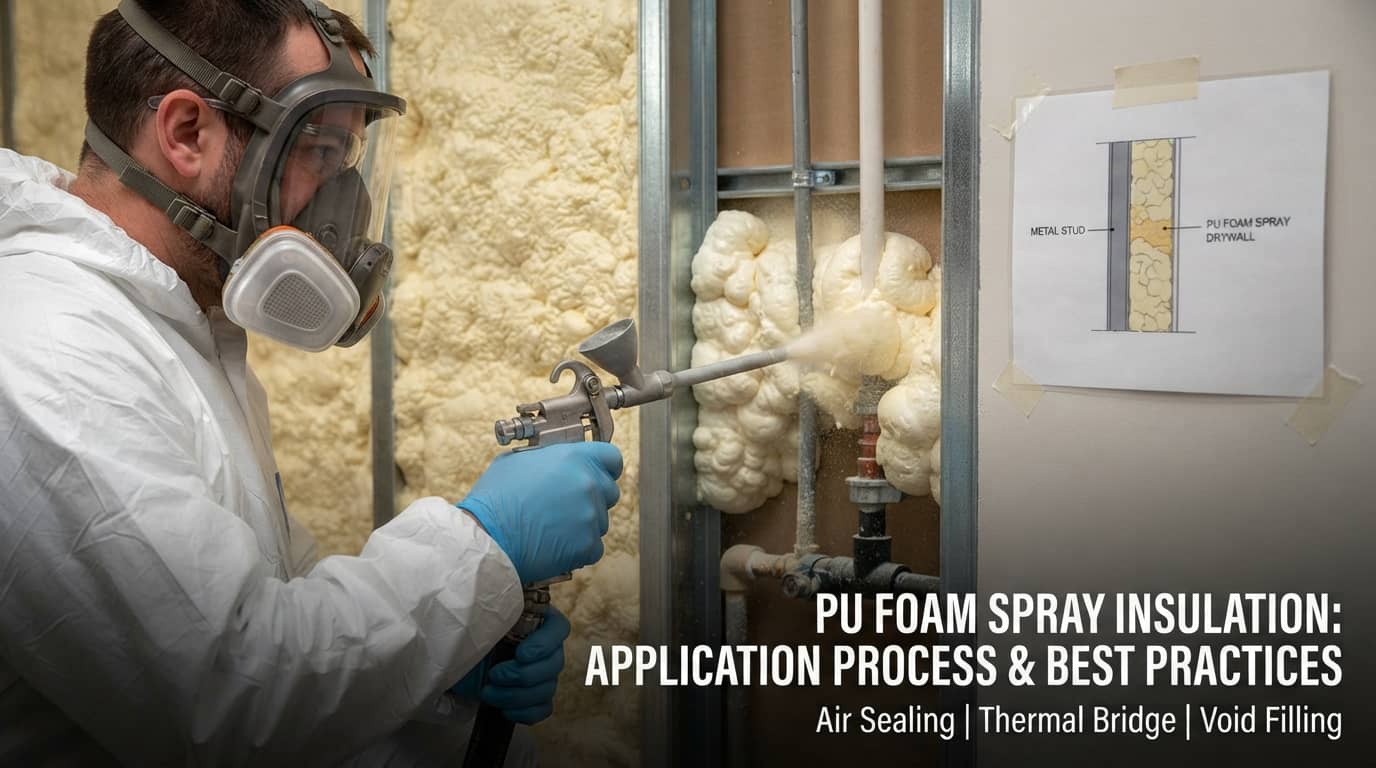
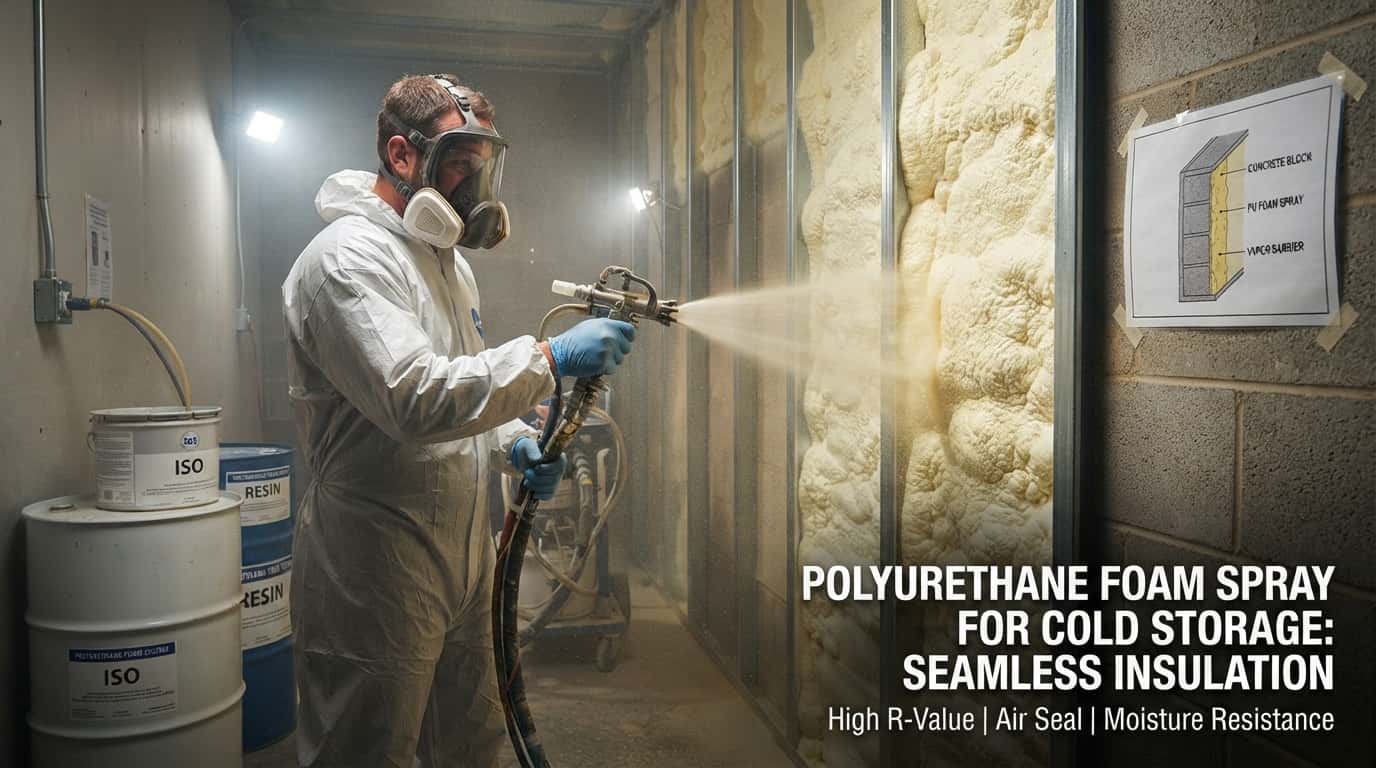
Most people encounter PU foam spray discussed as a residential roof-cooling solution, but the same material, applied with the same core properties, is also a genuine construction material inside commercial cold storage and refrigeration facilities. Here's why cold storage builders specifically reach for spray-applied foam rather than the sandwich panel systems covered on our Cold Storage Insulation guide.
Two Different Cold Storage Construction Approaches
Commercial cold storage facilities are typically built using one of two insulation approaches: pre-fabricated PUF/PIR sandwich panels (rigid, factory-made panels bolted together on site, the primary focus of our Cold Storage Insulation guide), or spray-applied PU foam directly onto the structural shell on site. Both use polyurethane as the core insulating material, the difference is manufacturing method and application context, not the underlying chemistry.
Why Some Commercial Buyers Choose Spray-Applied Foam Over Panels
Irregular or complex structural shapes. Sandwich panels are manufactured as flat or standard-profile pieces, meaning irregular building shapes, existing structures being retrofitted for cold storage use, or spaces with unusual geometry (corners, curves, structural obstructions) are genuinely harder to insulate cleanly with pre-formed panels. Spray-applied foam conforms to any shape it's applied to, without the joint-sealing challenge panels present in complex spaces.
Retrofit projects specifically. Converting an existing building or space into cold storage, rather than constructing a purpose-built facility from scratch, often favors spray foam, since it can be applied directly to existing walls and ceilings without the structural modifications sometimes needed to properly mount sandwich panels.
Seamless, joint-free coverage. Every joint in a panel system is a potential weak point for both thermal bridging and moisture infiltration, genuinely serious concerns in cold storage, where even small thermal leaks translate into ongoing compressor energy waste, and moisture infiltration can lead to ice buildup and structural issues over time. Spray-applied foam eliminates joints entirely across the treated surface.
Combined insulation and air-sealing in one step. Spray foam's expanding, gap-filling application means it simultaneously insulates and seals air leaks, for cold storage specifically, this dual function directly protects against both heat gain and moisture/humidity infiltration in a single application.
Why Some Commercial Buyers Still Choose Panels Instead
This isn't a case where spray foam universally wins, sandwich panels remain the standard choice for large-scale, purpose-built cold storage construction for good reasons: structural contribution (quality panels contribute genuine structural rigidity to the building, not just insulation), consistent factory-controlled quality (panel manufacturing offers more predictable, tested performance specifications than on-site spray application quality, which varies more by installer skill and site conditions), and faster large-area installation for straightforward, large, flat-surface facilities where panel installation speed genuinely outpaces spray application across the same area.
See our Cold Storage Insulation guide for the full PUF vs PIR vs EPS panel comparison for purpose-built facilities.
The Practical Decision Framework
Choose spray-applied PU foam for cold storage when: retrofitting an existing space, dealing with irregular structural geometry, or prioritizing a genuinely seamless, joint-free thermal envelope over raw installation speed.
Choose panel-based construction for cold storage when: building a new, purpose-built, large-scale facility with standard geometry, where structural contribution and consistent factory quality matter, and where installation speed across large flat areas is a genuine priority.
Have questions about this?
Chat with us on WhatsApp. We usually reply within minutes.
Many larger commercial projects use both: panels for the main structural walls and ceiling, with spray foam used specifically at joints, corners, and irregular connection points where panel-only construction would otherwise leave weak points, a hybrid approach that gets the structural and quality benefits of panels while closing the gaps that pure panel construction can't fully seal.
Related Guides
- Cold Storage Insulation, PUF vs PIR vs EPS Panels
- PU Foam Spray, Full Pricing Guide
- What Happens During a PU Foam Spray Application
- Thermocol vs Jumbolon vs PU Foam
Frequently Asked Questions
Q1: Is PU foam spray used for anything other than home roofs? Yes, the same polyurethane spray foam material is also used commercially inside cold storage and refrigeration facility construction, particularly for irregular structural shapes, retrofit projects, and sealing joints between panel sections. The core material and properties are the same; the application context differs.
Q2: Why would a cold storage builder choose spray foam over sandwich panels? Spray foam conforms naturally to irregular structural shapes and retrofit spaces where pre-formed panels are harder to install cleanly, provides seamless joint-free coverage (eliminating panel-joint weak points for thermal bridging and moisture infiltration), and combines insulation with air-sealing in a single application, genuinely useful for complex or retrofit cold storage projects specifically.
Q3: Are sandwich panels still better than spray foam for most cold storage projects? For large-scale, purpose-built facilities with standard geometry, yes generally, panels contribute genuine structural rigidity, offer more consistent factory-controlled quality specifications, and install faster across large flat areas compared to spray application. See our Cold Storage Insulation guide for the full panel-type comparison.
Q4: Can spray foam and sandwich panels be used together in the same cold storage facility? Yes, and this is common in practice, many larger commercial projects use panels for main structural walls and ceilings while using spray foam specifically at joints, corners, and irregular connection points, combining the structural and quality benefits of panels with the seamless coverage spray foam provides at otherwise-vulnerable connection points.
Q5: Why does joint-free coverage matter so much for cold storage specifically? Every joint in a panel system is a potential weak point for both thermal bridging (ongoing compressor energy waste from heat leaking in) and moisture infiltration (which can cause ice buildup and structural issues over time). In cold storage, where facilities run continuously for years, even small thermal leaks compound into significant ongoing electricity cost, making joint-free coverage a genuine performance consideration, not just a nice-to-have.
Q6: Is spray foam a good choice for retrofitting an existing building into cold storage? Yes, often, spray foam can be applied directly to existing walls and ceilings without the structural modifications sometimes needed to properly mount sandwich panels, making it a genuinely practical choice for converting an existing structure rather than constructing a purpose-built facility from scratch.
Q7: Does spray foam provide the same insulation performance as PIR panels for cold storage? Performance can be comparable when spray foam is applied correctly at appropriate density, but on-site spray application quality varies more by installer skill and site conditions than factory-manufactured panels, which offer more predictable, tested performance specifications. This is a genuine trade-off worth discussing with your installer for large-scale commercial projects.
Have questions about this?
Chat with us on WhatsApp. We usually reply within minutes.