Three materials, three price points, and genuinely different performance profiles, Pakistani buyers researching roof insulation almost always end up comparing thermocol, jumbolon, and PU foam spray at some point. Here's the honest comparison, without pretending one material wins at everything.
The Three Materials, In Plain Terms
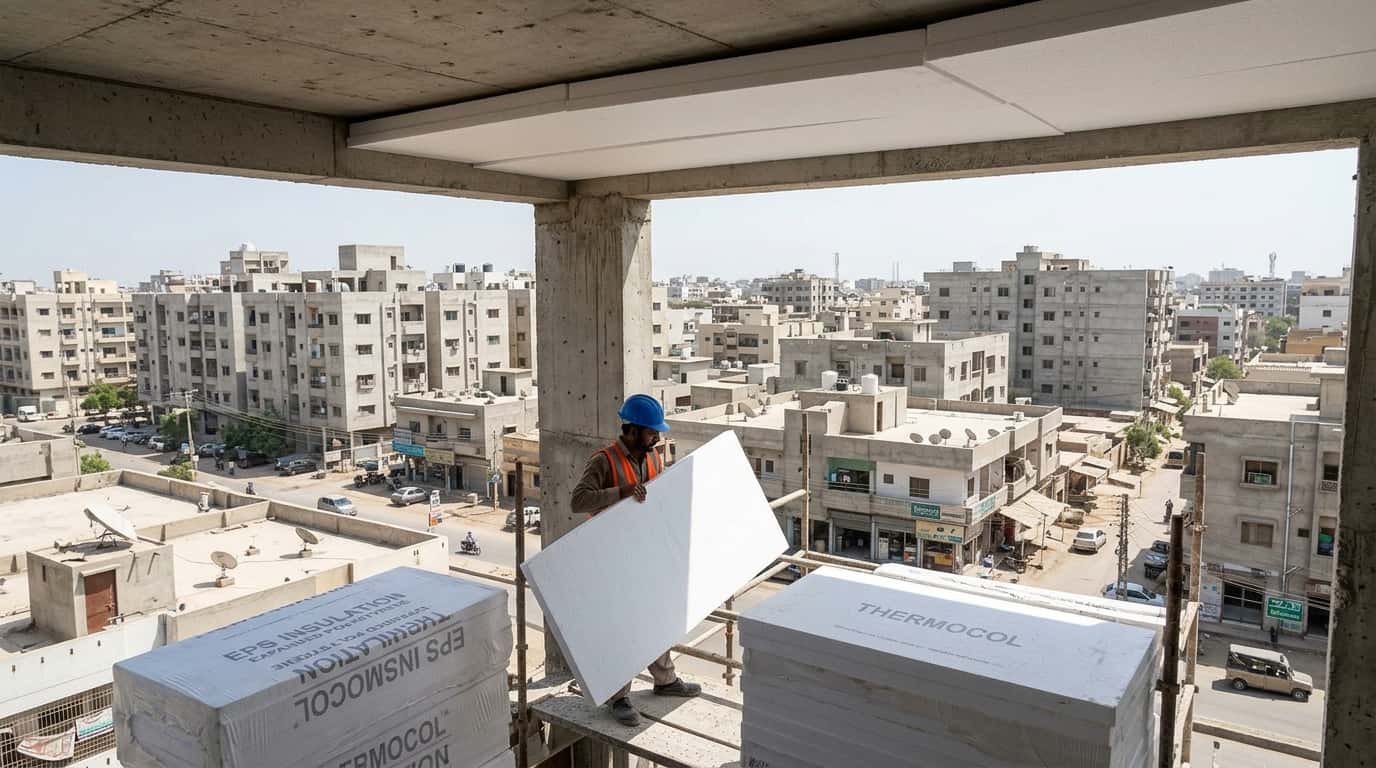
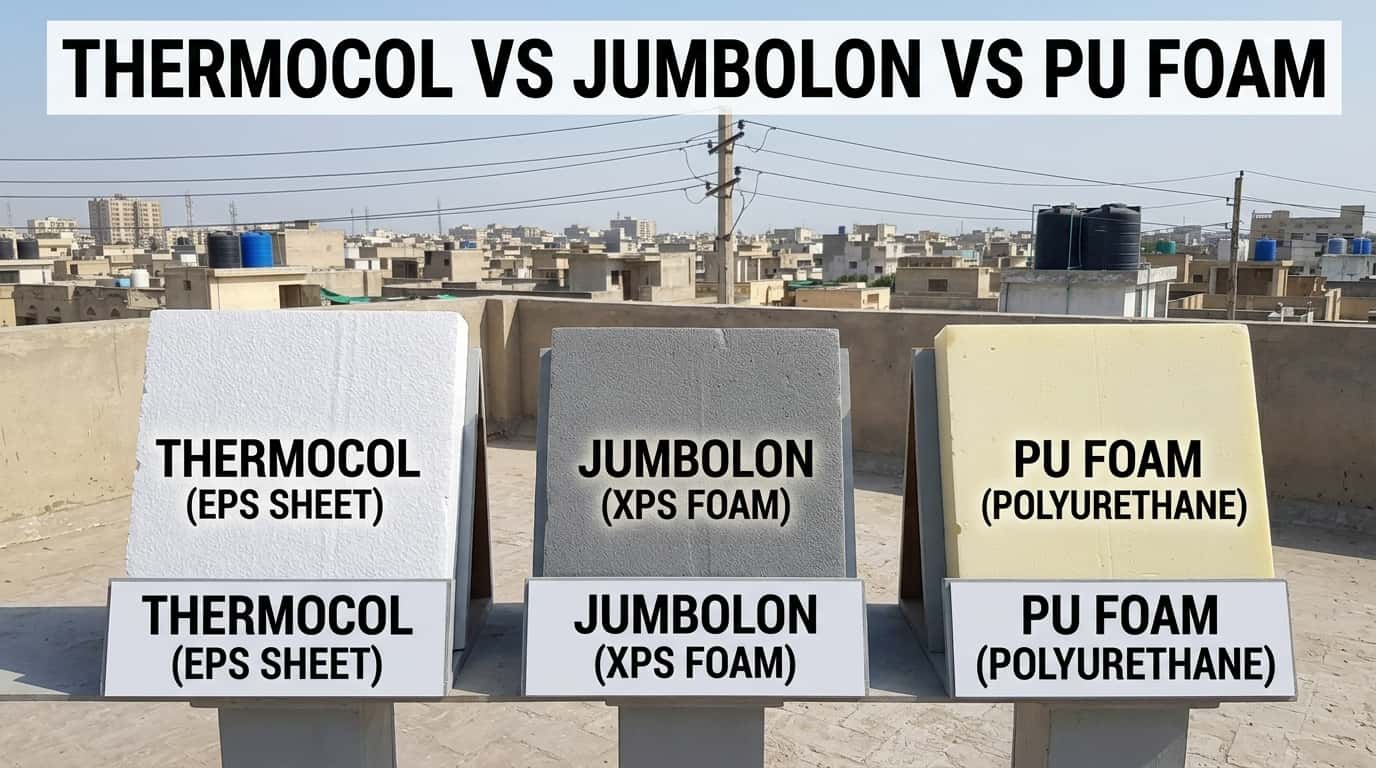
Thermocol (EPS, Expanded Polystyrene): The budget standard. Rigid foam sheets, lightweight, widely available, easy to cut and install. This is what most Pakistani homeowners mean when they say "thermocol sheet."
Jumbolon (XPS, Extruded Polystyrene): A denser, stronger cousin of thermocol. Same base material family, but manufactured through an extrusion process that produces a tighter, more moisture-resistant cell structure, genuinely better performance, at a genuinely higher price.
PU Foam Spray (Polyurethane): A liquid-applied foam that expands and cures in place, creating a seamless layer with no joints at all, a fundamentally different application method from the other two, which are pre-formed sheets.
Price Comparison
| Material | Price Range | Relative Position |
|---|---|---|
| Thermocol/EPS | PKR 14-75 per sq ft (varies by thickness) | Lowest cost |
| Jumbolon/XPS | PKR 3,500-7,000 per 4×8 sheet | Roughly 3-5x thermocol per equivalent coverage |
| PU Foam Spray | PKR 100-800 per sq ft (installed) | Highest, but includes labour and waterproofing in one step |
See our Thermocol Sheet guide and PU Foam Spray guide for detailed current pricing on each.
Performance Comparison, Where Each Material Actually Wins
Insulation Performance (R-value per inch)
Jumbolon/XPS generally offers better insulation value per inch of thickness than standard thermocol/EPS, thanks to its denser, more uniform cell structure. PU foam spray, when applied at appropriate density, can match or exceed both, but performance varies more by application quality than the other two materials, since it's a liquid-applied product rather than a consistent factory-made sheet.
Water Resistance
This is where the three materials genuinely diverge the most:
- Thermocol/EPS absorbs some moisture over time and needs a separate waterproofing layer for full protection
- Jumbolon/XPS has notably better moisture resistance than standard EPS due to its closed, extruded cell structure, a genuine upgrade if water resistance matters for your specific roof
- PU Foam Spray is inherently waterproof as applied, it fills every crack and seam on contact, providing heat insulation and leak-sealing in one single application
Handling Irregular Roof Shapes
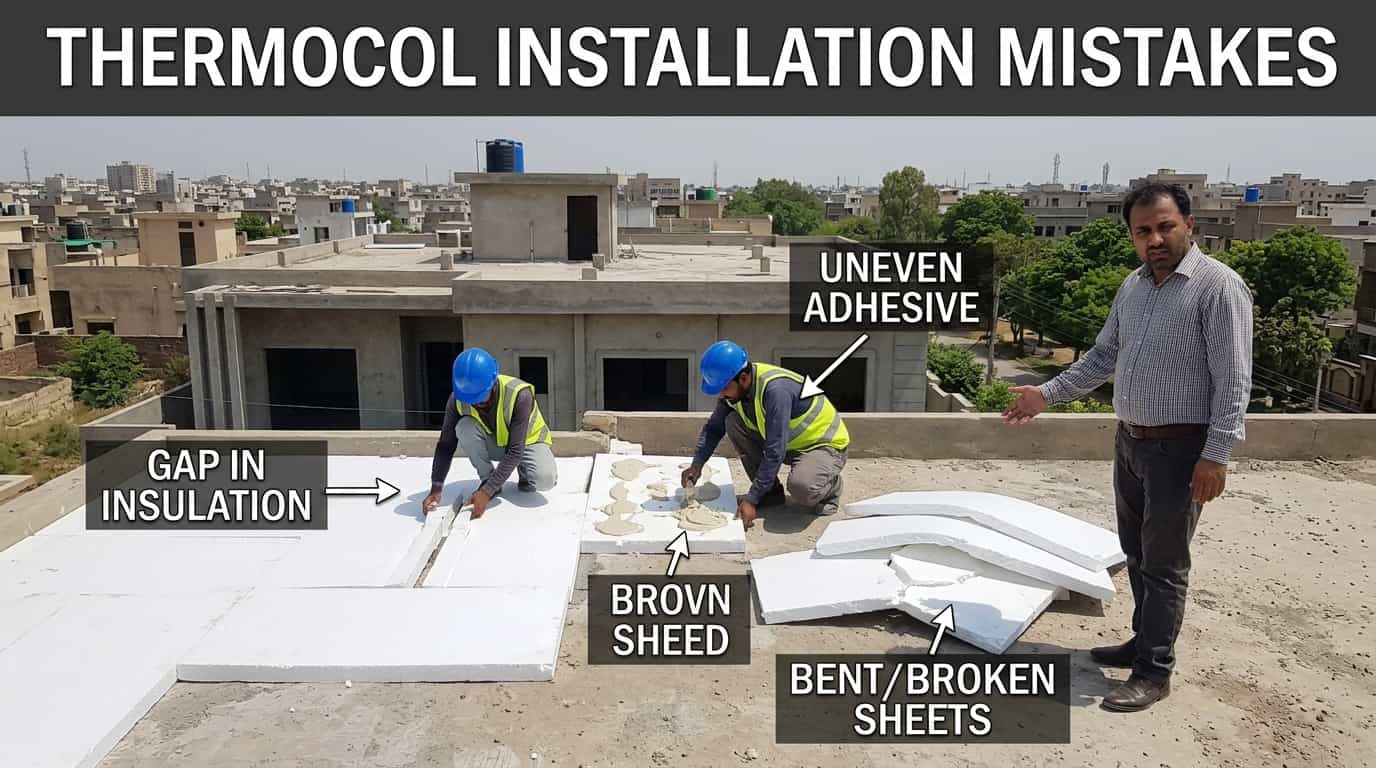
Thermocol and jumbolon are both pre-formed sheets, meaning irregular roof shapes, pipes, vents, and obstructions require careful cutting and joint-sealing around each obstacle. PU foam spray, being liquid-applied, naturally conforms to any shape without the joint-sealing challenge, a genuine practical advantage for complex roofs.
Installation Complexity
Thermocol is the most DIY-accessible of the three (see our installation guide for the full process). Jumbolon installs similarly to thermocol but its higher rigidity can make cutting slightly more demanding. PU foam spray requires professional application with specialized spray equipment, this is not a realistic DIY project.
Longevity
Thermocol, if protected from direct UV and mechanical damage, offers a reasonably long service life for a budget material. Jumbolon's denser structure generally holds up longer under the same conditions. PU foam spray, properly applied, typically offers 20-25 years of service life with minimal maintenance, the longest of the three when done correctly.
Which Should You Actually Choose?
Choose Thermocol/EPS if: budget is the primary constraint, your roof is a simple flat shape, and you're comfortable either DIY-installing it or hiring basic labour. This remains the most cost-effective entry point into roof insulation for most Pakistani homeowners.
Have questions about this?
Chat with us on WhatsApp. We usually reply within minutes.
Choose Jumbolon/XPS if: you want meaningfully better performance and moisture resistance than standard thermocol, your budget allows the 3-5x price premium, and you still have a relatively simple roof shape where sheet-based installation works well.
Choose PU Foam Spray if: your roof has an irregular shape, existing leaks alongside the heat problem, or you specifically want a single-application solution that handles both insulation and waterproofing together, the higher upfront cost reflects genuinely different (not just "more expensive") capability, not just a premium markup on the same basic idea.
The Honest Bottom Line
There's no single "best" material here, there's a best material for your specific roof, budget, and problem combination. A simple, budget-conscious, leak-free flat roof rarely needs to skip past thermocol straight to PU foam spray. A complex, leaking, irregular roof rarely gets a satisfying result from thermocol sheets alone, regardless of how carefully they're installed. Match the material to the actual roof in front of you, not to whichever option sounds most impressive.
Related Guides
- Thermocol/EPS Sheet, Full Pricing Guide
- PU Foam Spray, Full Pricing Guide
- How to Install Thermocol Sheet
- Roof Heat Proofing
Frequently Asked Questions
Q1: What is the difference between thermocol and jumbolon? Thermocol (EPS) and jumbolon (XPS) are both polystyrene foam insulation, but jumbolon is manufactured through an extrusion process producing a denser, more moisture-resistant cell structure. Jumbolon offers better insulation performance and water resistance than standard thermocol, but costs roughly 3-5x more per equivalent coverage. (Ahrefs SV: 20/mo, "jumbolon sheet price in pakistan")
Q2: Is PU foam spray better than thermocol sheet? PU foam spray offers superior performance for irregular roof shapes, existing leaks, and situations needing both insulation and waterproofing in one application, since it's liquid-applied and inherently seamless. Thermocol remains the more budget-friendly, DIY-accessible choice for simple, flat, leak-free roofs where its lower cost per square foot delivers adequate performance without PU foam's added capability.
Q3: Which insulation material lasts the longest? PU foam spray, when properly applied, typically offers 20-25 years of service life with minimal maintenance, generally the longest of the three materials. Jumbolon's denser structure tends to outlast standard thermocol under equivalent conditions, though both perform reasonably well when protected from direct UV exposure and mechanical damage.
Q4: Can I install jumbolon myself like thermocol? Yes, generally, jumbolon installs using a similar sheet-based process to thermocol, though its higher rigidity and density can make cutting slightly more demanding than standard EPS. It remains more DIY-accessible than PU foam spray, which requires professional spray equipment and is not a realistic DIY project.
Q5: Why does PU foam spray cost so much more than thermocol? PU foam spray's higher cost reflects genuinely different capability, not just a premium price on the same idea, it provides seamless, gap-free coverage that naturally conforms to irregular shapes, inherent waterproofing without a separate layer, and typically the longest service life of the three materials. For simple, budget-conscious projects, this added capability may not be necessary; for complex or leak-prone roofs, it often justifies the cost.
Q6: Which material is best for a roof with pipes, vents, and obstructions? PU foam spray handles irregular roof shapes and obstructions most naturally, since it's liquid-applied and conforms to any surface without requiring precise sheet cutting and joint-sealing around each obstacle. Thermocol and jumbolon both require more careful cutting and sealing work around obstructions, which adds labour time and increases the risk of gaps if not done carefully.
Q7: Is jumbolon worth the extra cost over thermocol for a standard home roof? For a simple, budget-conscious flat roof without significant moisture concerns, standard thermocol often delivers adequate performance without jumbolon's price premium. Jumbolon becomes worth the extra cost specifically when moisture resistance genuinely matters for your situation, or when you want meaningfully better insulation performance and are willing to pay 3-5x more per equivalent coverage to get it.
Have questions about this?
Chat with us on WhatsApp. We usually reply within minutes.