When you compare thermocol sheet prices between suppliers, an identical-looking sheet at a lower price often means one specific thing: recycled EPS instead of virgin EPS. This is genuinely the single biggest hidden quality variable in the Pakistani thermocol market, and it's rarely mentioned upfront by sellers competing on the lowest sticker price.
Virgin EPS vs Recycled EPS, What's Actually Different
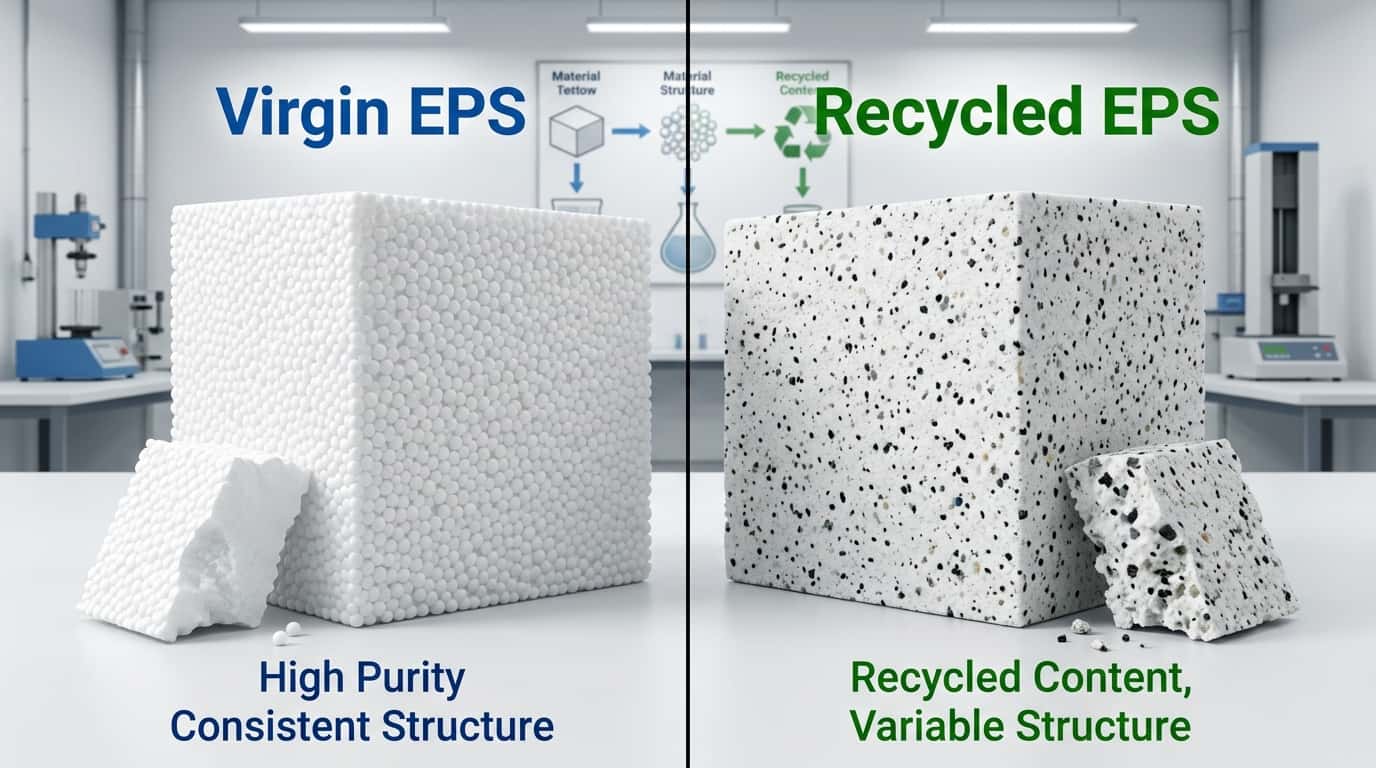
Virgin EPS is manufactured from fresh, unused polystyrene beads, material that hasn't been through a prior product lifecycle. The resulting foam has consistent cell structure, predictable density, and performs at the insulation and structural specifications the manufacturer states.
Recycled EPS incorporates reprocessed polystyrene, material recovered from packaging waste, prior foam products, or manufacturing offcuts, melted down and reformed. This isn't inherently a scam or automatically low-quality, but the reprocessing introduces genuine variability: cell structure consistency, density uniformity, and structural integrity can all vary more than virgin material, and the exact recycled content ratio is rarely disclosed on the packaging.
Why This Matters for Insulation Performance Specifically
Since thermocol's insulating property depends on trapped air pockets within a consistent cell structure (see our physics explanation for the full mechanism), inconsistent cell structure in recycled EPS can mean inconsistent insulation performance across a single sheet, let alone across sheets from the same batch. A virgin EPS sheet at a stated density performs predictably at that density; a recycled EPS sheet marketed at the same nominal density may perform somewhat below that specification in practice, simply because the reprocessing hasn't produced as uniform a structure.
Why This Matters for Structural Durability
Recycled EPS generally shows greater variability in structural strength compared to virgin material, some batches perform reasonably close to virgin-equivalent, while others are noticeably weaker and more prone to crumbling, crushing, or breaking during handling and installation. This variability is the core problem: you genuinely don't know which you're getting from a given supplier without either their explicit disclosure or independent testing, neither of which is common practice for budget thermocol purchases in Pakistan.
The Real Cost Comparison
| Factor | Virgin EPS | Recycled EPS |
|---|---|---|
| Upfront price | Higher | Lower |
| Insulation consistency | Predictable, matches stated density | Variable, may underperform stated density |
| Structural durability | Consistent | Variable, sometimes notably weaker |
| Handling/installation breakage | Lower risk | Higher risk, especially with lower-quality batches |
| Effective lifespan | Generally longer | Often shorter, particularly under mechanical stress |
The genuine "isn't always cheaper" case: if recycled EPS underperforms its stated density enough to meaningfully reduce insulation effectiveness, you're paying less upfront but getting less AC bill reduction, potentially enough less that the virgin EPS sheet, despite its higher purchase price, delivers better value per rupee of actual heat reduction achieved. Add a shorter effective lifespan into that calculation, and the "cheaper" option can become the more expensive one over a multi-year ownership period.
How to Tell Which You're Buying
This is genuinely difficult without lab testing, but a few practical signals help:
- Ask directly. Reputable suppliers who use virgin material generally state this clearly, since it's a genuine selling point, vague or evasive answers to a direct question about virgin vs recycled content are themselves informative.
- Check for unusual crumbling or inconsistent texture when handling a sample sheet, visibly inconsistent cell structure or unusually brittle edges can indicate recycled content, though a clean-looking surface doesn't guarantee virgin material either.
- Be appropriately skeptical of prices significantly below the typical market range for a given thickness, a price that's meaningfully lower than comparable suppliers is more often explained by material quality than by one supplier simply having better margins.
Have questions about this?
Chat with us on WhatsApp. We usually reply within minutes.
Is Recycled EPS Ever the Right Choice?
Yes, in specific situations, for temporary applications, packaging use where insulation performance isn't the primary concern, or budget-constrained projects where "some insulation" genuinely beats "no insulation" even if performance isn't optimal. The issue isn't that recycled EPS is worthless; it's that buyers should know which they're purchasing and price their expectations accordingly, rather than assuming two similarly-priced-looking sheets perform identically.
Related Guides
- Thermocol/EPS Sheet, Full Pricing Guide
- Does Thermocol Sheet Actually Reduce Heat?
- How to Install Thermocol Sheet
- 4 Thermocol Installation Mistakes
- Thermocol vs Jumbolon vs PU Foam
Frequently Asked Questions
Q1: What is the difference between virgin and recycled EPS thermocol? Virgin EPS is manufactured from fresh, unused polystyrene beads, producing consistent cell structure and predictable insulation performance. Recycled EPS incorporates reprocessed polystyrene from packaging waste or prior products, which introduces variability in cell structure, density consistency, and structural strength, performance that can meaningfully differ from the stated specifications, even at a similar nominal density.
Q2: How can I tell if a thermocol sheet is virgin or recycled EPS? Ask the supplier directly, reputable sellers using virgin material typically state this clearly as a selling point, while vague or evasive answers are themselves informative. Physical signs like unusual crumbling, inconsistent texture, or unusually brittle edges when handling a sample can also suggest recycled content, though a clean surface appearance doesn't guarantee virgin material.
Q3: Is recycled EPS thermocol always bad quality? Not necessarily, recycled EPS varies in quality depending on the reprocessing and recycled content ratio, and it can be a reasonable choice for temporary applications, packaging, or genuinely budget-constrained projects where "some insulation" is better than none. The issue is variability and lack of disclosure, not that recycled EPS is universally unusable.
Q4: Why would virgin EPS actually be cheaper in the long run despite costing more upfront? If recycled EPS underperforms its stated density enough to meaningfully reduce insulation effectiveness, you get less AC bill reduction for your money despite the lower purchase price. Combined with a potentially shorter effective lifespan under mechanical stress, the total cost over several years of ownership can end up higher than simply buying virgin EPS from the start.
Q5: Does recycled EPS insulate as well as virgin EPS at the same thickness and density? Not reliably, the reprocessing involved in recycled EPS introduces cell structure inconsistency that can cause actual performance to fall below the stated density specification, even when the sheet is marketed at the same nominal thickness and density as a virgin equivalent. Performance from recycled EPS is genuinely more variable batch to batch.
Q6: Should I be suspicious of unusually cheap thermocol sheet prices? Yes, reasonably, a price significantly below the typical market range for a given thickness is more often explained by lower-quality (often recycled) material than by one supplier simply operating with better margins. This doesn't mean every discount is a red flag, but it's worth asking specifically about material source when a price seems notably lower than comparable options.
Q7: Does virgin vs recycled EPS affect how the sheet handles during installation? Yes, recycled EPS generally shows greater variability in structural strength, with some batches noticeably more prone to crumbling, crushing, or breaking during handling and cutting compared to virgin material. This can mean more wasted material during installation, adding to the effective cost even before considering long-term insulation performance differences.
Have questions about this?
Chat with us on WhatsApp. We usually reply within minutes.