Water tanks all look roughly the same on a showroom floor, round, plastic, a certain colour. But underneath that similar appearance sits genuinely different construction quality, and the difference shows up 2-3 years later as cracking, contamination, or a tank that simply doesn't hold up to Pakistan's climate the way a better-built one would. Here's what to actually check before you pay.
Ready to compare insulated options too? See our Water Tank Insulation guide for tanks specifically built to also manage heat, not just store water.
1. Food-Grade Certification, Non-Negotiable
Since most family members use the water tank for drinking water, the tank itself must be constructed of high-quality food-grade plastic, only polymers specifically made for food-contact use reliably stay safe over extended storage periods. Ask specifically for food-grade certification (BIBRA certification is one recognized standard referenced by Pakistani manufacturers), don't assume a tank is food-grade just because it's marketed for household use generally.
2. Number of Layers, More Than a Marketing Number
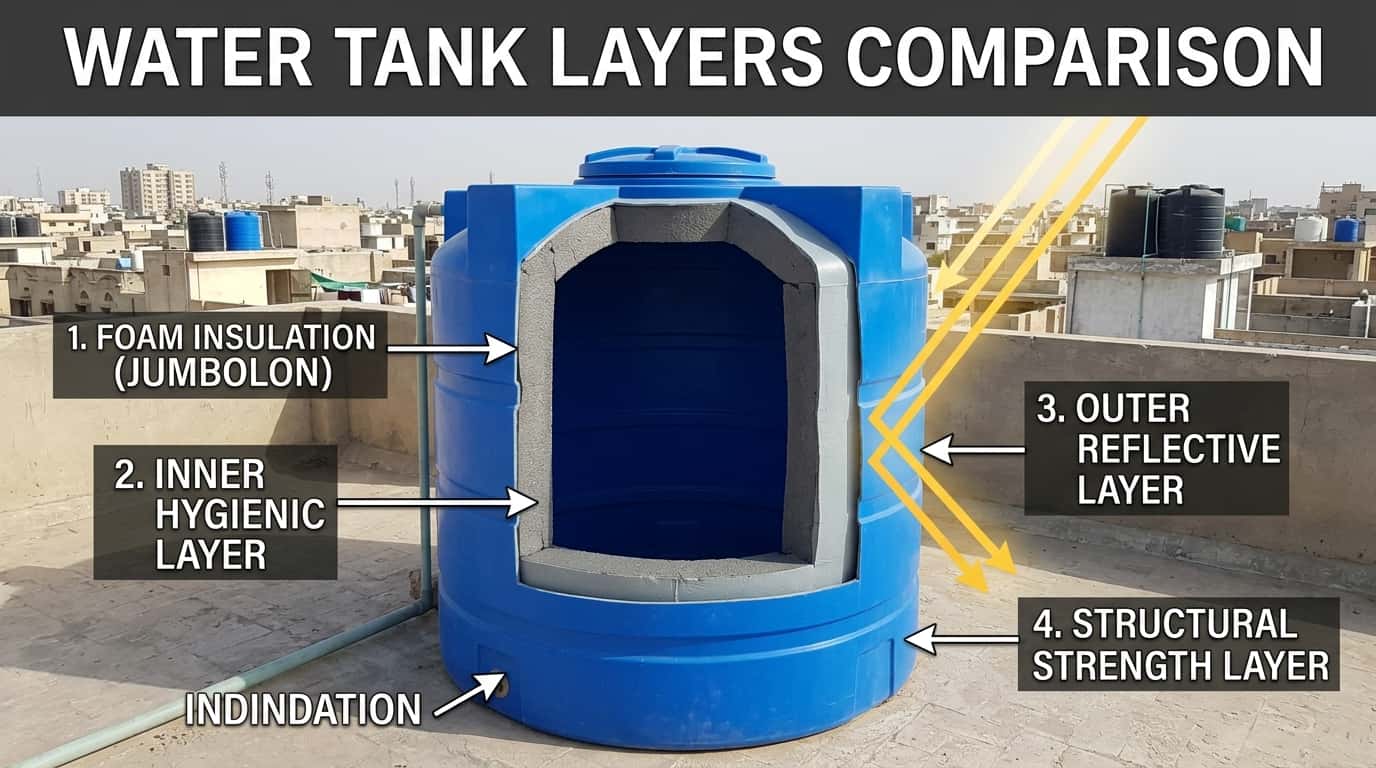
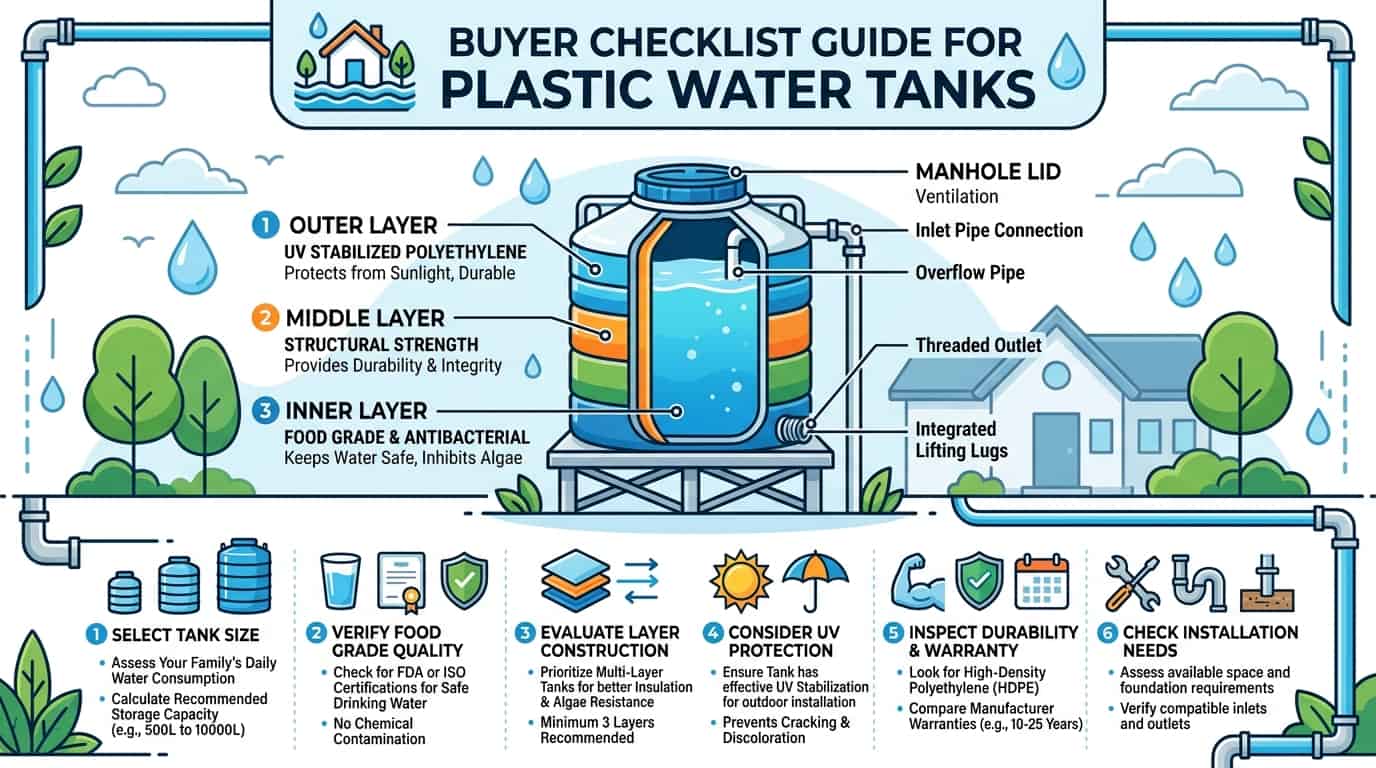
A plastic water storage tank can have multiple layers, each serving a specific function and shielding the tank from external climatic effects. Quality multi-layer construction typically includes:
- UV-resistant outer layer, protects against sun damage and prevents the plastic from becoming brittle and cracking over time
- Insulating/opaque middle layer, blocks light penetration into the tank, which is the key factor in preventing algae growth
- Food-grade inner layer, the actual water-contact surface, must be certified food-safe
Why the middle layer matters more than most buyers realize: colour is crucial for preventing algae growth specifically because algae needs light to grow, a tank with a dark, opaque middle layer stops light from reaching the water regardless of the tank's outer colour, which is why quality tanks combine a light-reflecting outer layer with a light-blocking inner structure rather than relying on outer colour alone.
Buyer's takeaway: don't judge a tank purely by whether it's white or black on the outside, ask specifically about the layer construction and what each layer does, since outer colour alone doesn't tell you whether algae growth is actually being prevented.
3. Virgin Plastic vs. Recycled Plastic
This is the single biggest quality differentiator between premium and budget tanks. Virgin polymer, fresh-made plastic resin generated directly from the industry, never previously used, produces tanks that are more dynamic, strong, and durable, with a genuinely longer service life. Cheap tanks made from recycled, low-grade plastic often weaken under sustained sun exposure and may develop leaks or contamination issues well before a virgin-plastic tank would show the same wear.
How to check: ask the seller directly whether the tank uses virgin or recycled plastic, reputable brands state this clearly as a selling point, and vague or evasive answers are themselves a warning sign.
4. UV Protection
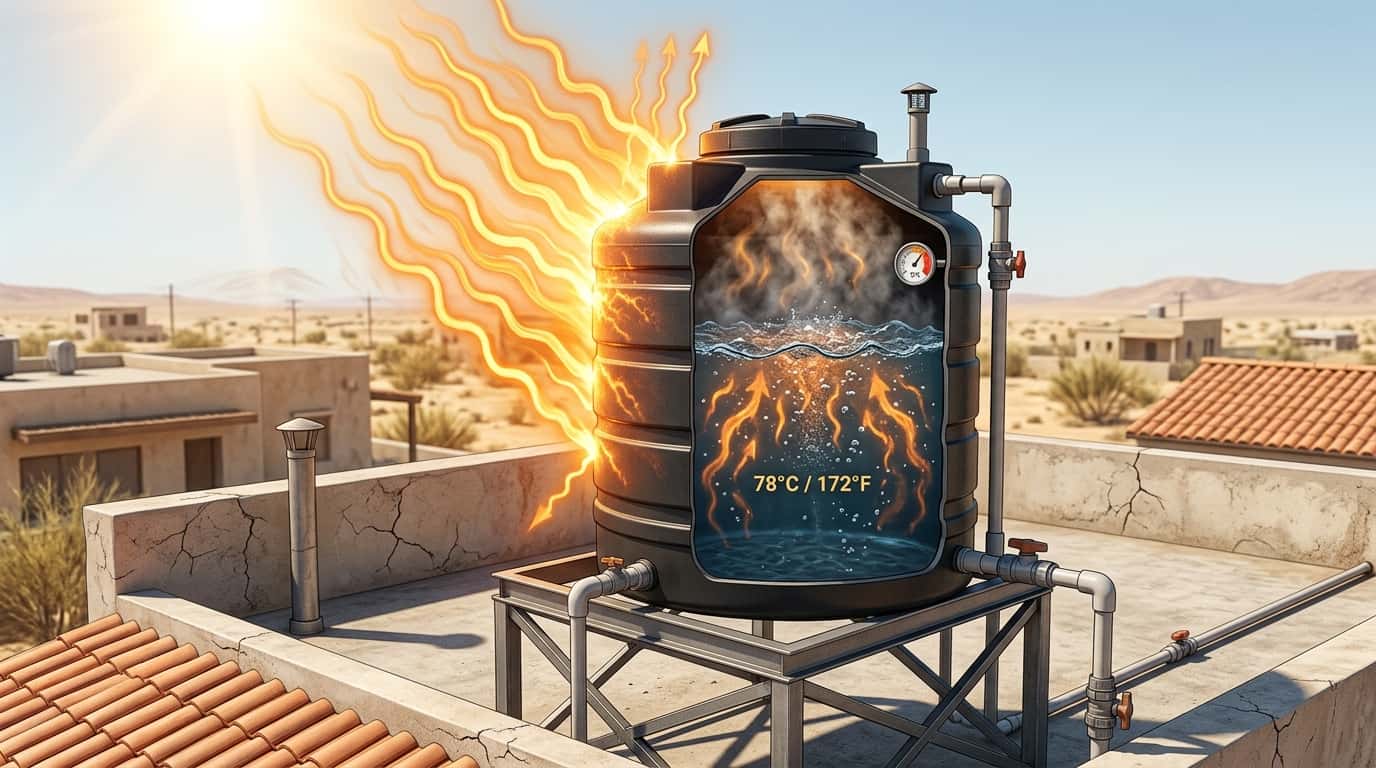
Choosing tanks with UV protection specifically prevents the outer surface from developing cracks over years of direct sun exposure, a genuine, common failure mode for Pakistani rooftop tanks given how much direct sun they receive. This is distinct from the tank's colour; UV resistance is a material property, not just a visual one.
5. Capacity, Sized to Actual Household Need
An average family of 4 people in Pakistan typically consumes around 650 litres daily, making a 500-1000 litre tank generally sufficient for a standard household. Larger housing complexes and apartment buildings housing many residents need correspondingly larger capacity, sizing too small means running dry during peak usage; sizing unnecessarily large means paying more upfront and taking up more rooftop space than needed.
6. Brand Reputation and Warranty
Branded tanks undergo strict quality checks, ensuring leak resistance and consistent wall thickness throughout the tank, a genuine manufacturing quality difference from unbranded, inconsistently produced alternatives. Recognized brands in the Pakistani market include Dura/DuraMax, Turkplast, Nepro, Master, Popular, and several others, most offering warranties in the 7-10 year range on their premium multi-layer lines.
Warranty length is a useful proxy for manufacturer confidence, a brand offering a 10-year warranty is implicitly telling you they expect the tank to genuinely last that long, which is meaningfully different from an unbranded tank with no stated warranty at all.
7. Shape and Installation Fit
Vertical, horizontal, capsule-shaped, and loft (low-profile "chourus") tanks are all available depending on your rooftop space and installation constraints. A loft tank makes sense where ceiling/roof clearance is limited; a standard vertical tank is the default choice where space allows. Confirm the shape fits your actual installation space before ordering, since returns on a large tank are more complicated than most product categories.
Have questions about this?
Chat with us on WhatsApp. We usually reply within minutes.
Plastic Water Tank Price in Pakistan, Quick Reference
| Size | Price Range (PKR) |
|---|---|
| 500L | Budget tier from ~6,000; branded multi-layer higher |
| 600L | 9,000 – 15,000 |
| 1000L | 22,000 – 32,000 |
Price depends primarily on the factors covered above, layer count, virgin vs recycled plastic, brand, and warranty, rather than capacity alone. Two 1000L tanks from different manufacturers can genuinely differ in real-world lifespan even at similar price points, which is exactly why checking construction quality matters more than comparing price tags alone.
The Full Checklist, At a Glance
Before you pay for a plastic water tank in Pakistan, confirm:
- ✅ Food-grade certification (ask specifically, don't assume)
- ✅ Multi-layer construction with a clear explanation of what each layer does
- ✅ Virgin plastic, not recycled (ask the seller directly)
- ✅ UV-resistant outer layer
- ✅ Capacity matched to your actual household size (roughly 650L/day for a family of 4)
- ✅ Recognized brand with a stated warranty (7-10 years is a reasonable expectation for quality tanks)
- ✅ Shape/size confirmed to fit your actual installation space
Related Guides
- Water Tank Insulation, Full Pricing Guide
- Why Does Your Rooftop Water Tank Get So Hot?
- Water Tank Cleaning in Pakistan
- Insulation Services, Full Range
Frequently Asked Questions
Q1: What is the plastic water tank price in Pakistan? Plastic water tank prices in Pakistan vary by size and quality: 500L tanks start from around PKR 6,000 for budget options, 600L tanks cost PKR 9,000-15,000, and 1000L tanks cost PKR 22,000-32,000 depending on brand and construction quality. Price depends heavily on layer count, virgin vs. recycled plastic, and brand reputation, not just capacity. (Ahrefs SV: 250/mo, TP 3,100, the largest volume-to-potential gap in this topic)
Q2: What does food-grade mean for a water tank, and why does it matter? Food-grade means the plastic is specifically manufactured for safe food and drinking water contact, using polymers that don't leach harmful substances into stored water over extended periods. This matters because most Pakistani households use their water tank for drinking water, making food-grade certification a genuine safety requirement, not just a marketing term, always ask sellers to confirm this specifically.
Q3: How many layers should a quality plastic water tank have? Quality tanks typically use three or more layers: a UV-resistant outer layer to prevent cracking from sun exposure, an opaque/dark middle layer to block light and prevent algae growth, and a food-grade inner layer for safe water contact. Each layer serves a distinct function, so ask specifically what each layer in a tank you're considering actually does, rather than assuming more layers automatically means better quality.
Q4: Does tank colour actually matter for preventing algae? Yes, but not in the way most buyers assume, a dark, opaque middle layer blocks light from reaching the stored water, which is what actually prevents algae growth, since algae needs light to grow. Outer colour (white vs black) primarily affects heat absorption, not algae prevention directly. Quality multi-layer tanks address both factors through their layered construction rather than relying on a single outer colour choice.
Q5: What is the difference between virgin plastic and recycled plastic water tanks? Virgin plastic is fresh-made polymer resin never previously used, producing stronger, more durable tanks with a genuinely longer service life. Recycled, low-grade plastic tanks are typically cheaper upfront but weaken faster under sustained sun exposure and may develop leaks or contamination issues well before a virgin-plastic tank shows comparable wear. Always ask sellers directly which type of plastic their tank uses.
Q6: What size water tank do I need for my household? An average family of 4 in Pakistan consumes roughly 650 litres of water daily, making a 500-1000 litre tank generally sufficient for a standard household. Larger housing complexes or apartment buildings with many residents need proportionally larger capacity. Sizing too small risks running dry during peak usage; oversizing means unnecessary upfront cost and rooftop space usage.
Q7: Is a branded water tank worth paying more for compared to an unbranded one? Generally yes, branded tanks undergo stricter quality checks ensuring leak resistance and consistent wall thickness, and typically come with meaningful warranties (7-10 years is common among reputable brands), which signals genuine manufacturer confidence in the product's longevity. Unbranded tanks with no stated warranty carry more uncertainty about actual construction quality and expected lifespan.
Have questions about this?
Chat with us on WhatsApp. We usually reply within minutes.