Most Pakistani households think about their water tank exactly twice: when they buy it, and when the water starts smelling off. In between, sediment, algae, and bacteria build up quietly, invisible until the water quality or the tank's own condition forces the issue. This guide covers how often cleaning is genuinely needed, what the process actually involves, and what professional service costs across major Pakistani cities.
Looking to buy or insulate a tank instead? See our Water Tank Insulation guide for pricing on new insulated tanks and retrofit covers.
Why Water Tank Cleaning Actually Matters
Over time, sediment, bacteria, algae, and other contaminants accumulate in water tanks. Regular cleaning removes these impurities, ensuring the water remains safe and clean for consumption, without it, contaminants multiply and compromise water quality over time, sometimes without any obvious visual warning.
Beyond health, there's a structural reason too: sediment, minerals, and chemicals present in water can cause corrosion and deterioration of the tank and its components. Regular cleaning removes these contaminants, protecting the tank's structural integrity and extending the life of your entire water supply system, meaning a neglected tank isn't just a water-quality problem, it's a "replace the tank sooner" problem too.
How Often Should You Clean Your Water Tank?
The general rule: hire professional cleaning services at least once every two years, regardless of the type, size, or material of your tank.
But several factors mean you may need it more often, every year or every six months:
- You live in a hot and humid climate (most of Pakistan qualifies for parts of the year)
- You have a plastic or concrete tank specifically (these accumulate buildup differently than steel)
- You use water sparingly or irregularly, letting it sit longer between refills
- Your local water quality is already poor before it even reaches the tank
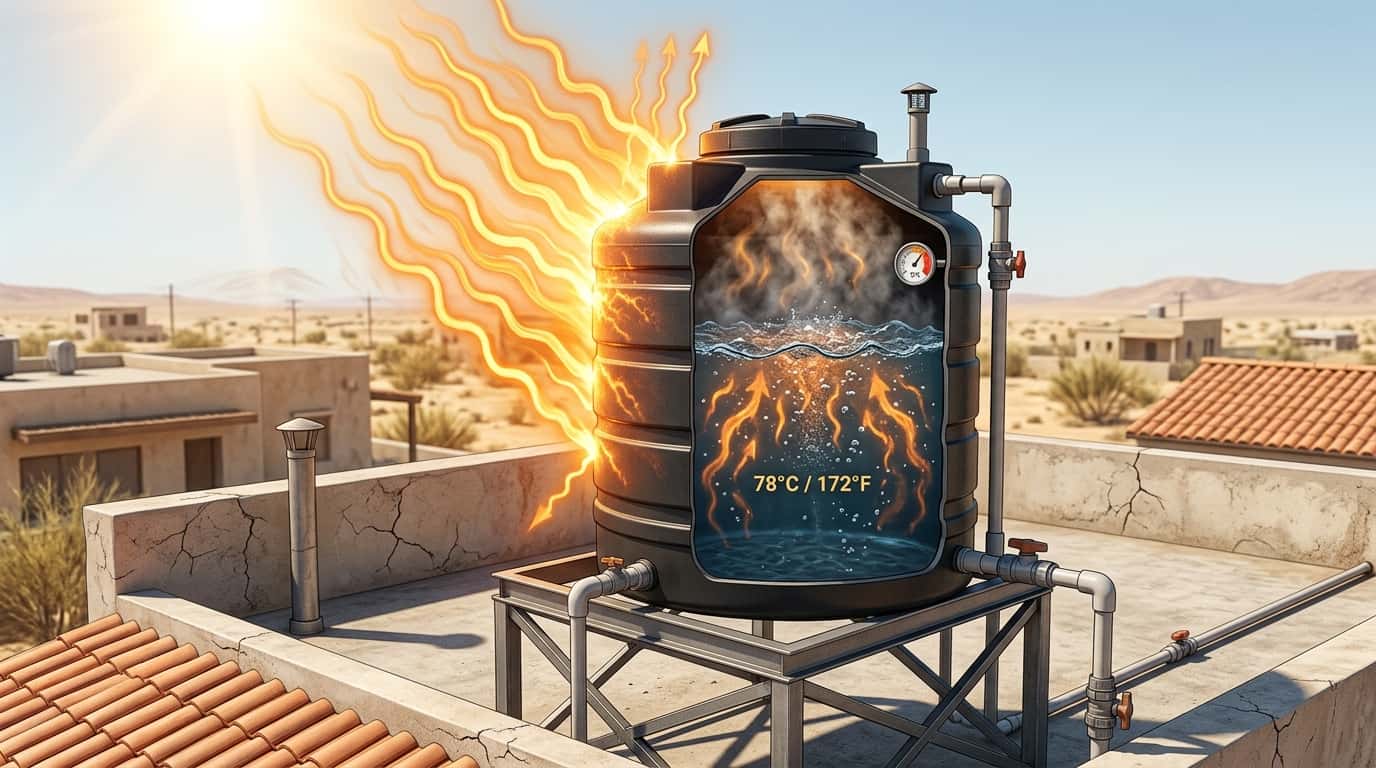
Climate matters more in Pakistan specifically: high temperatures increase evaporation, concentrating contaminants in whatever water remains, while humidity promotes algae and bacteria growth by providing consistent moisture and warmth, a combination most of Pakistan experiences for a significant part of the year.
How to Tell Your Tank Needs Cleaning Now
Don't wait for the two-year mark if you notice:
- Cloudy, discolored, or unusually tasting/smelling water
- Visible sediment when you run the tap after the water's been sitting
- A tank that hasn't been cleaned in "a few months" by your own admission, this is genuinely the right moment to book a service before it becomes a bigger job
DIY Water Tank Cleaning, Step by Step
If you're doing an interim clean yourself before professionals arrive, or maintaining a small tank between professional services:
- Drain all the water from the tank completely
- Scrub the interior walls with a long-handled brush, reaching corners and seams where sediment collects
- Mix a cleaning solution, 1 part bleach to 10 parts water is the standard ratio
- Apply the solution to all interior surfaces and let it sit for approximately 2 hours to disinfect
- Rinse thoroughly with clean water, multiple rinses if any bleach smell remains
- Allow to dry before refilling, if time permits
A genuine safety note: DIY cleaning works reasonably well for smaller, easily accessible plastic tanks. For underground tanks, tanks with heavy sediment buildup after years of neglect, or anything requiring you to physically enter a confined space, professional service is the safer choice, confined-space entry and heavy sediment removal carry real risks that aren't worth taking on yourself.
Water Tank Cleaning Cost in Pakistan, 2026
Professional water tank cleaning cost varies by tank size, material, condition, and city:
| Tank Size | Price Range (PKR) |
|---|---|
| Small (up to 500 gallons) | 1,500 – 5,000 |
| Medium (500-1000 gallons) | 3,000 – 6,000 |
| Large / underground tanks | 5,000 – 10,000+ |
What affects the final price:
- Tank material, plastic/PVC tanks are common in homes and relatively affordable to clean; concrete tanks (older houses, commercial buildings) are harder to clean and cost more; underground tanks require more safety precautions and time
- Sediment buildup, if your tank hasn't been cleaned in years, expect an extra PKR 1,000–2,000 for sludge removal beyond the base price
- Location, premium areas in major cities can run slightly higher due to demand and accessibility
- Add-ons, pest control or pipe flushing bundled with the cleaning increases total cost
Have questions about this?
Chat with us on WhatsApp. We usually reply within minutes.
What a Professional Cleaning Service Actually Includes
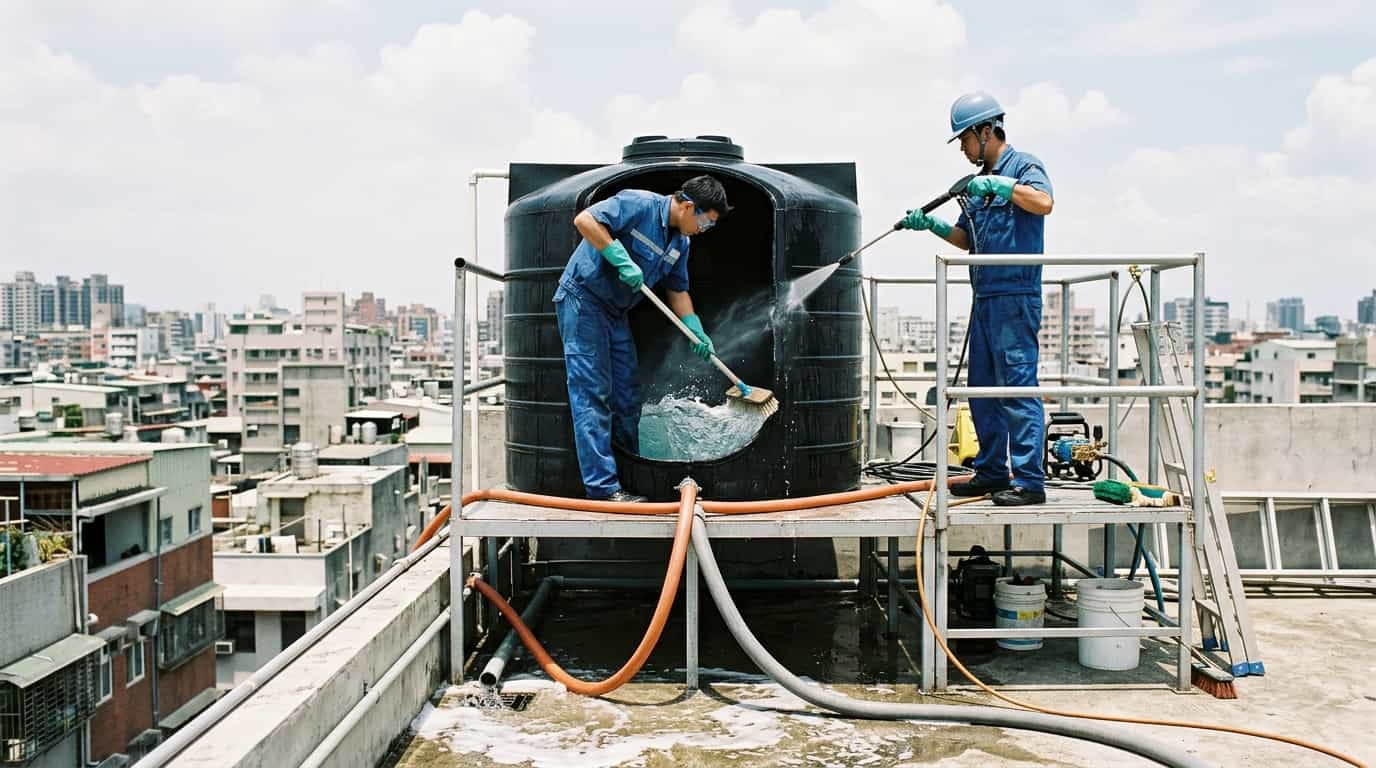
A proper professional service typically follows this sequence:
- Inspection, assessing tank size, material, and degree of contamination before starting
- Complete draining, removing all water and exposing interior surfaces
- Scrubbing, removing hardened sediment, rust, and biological buildup with specialized tools
- Pressure washing, flushing out loosened debris, algae, and residue from every surface
- Disinfection, applying food-grade, WHO-approved disinfectants to kill remaining bacteria, viruses, and fungi, left to sit for the required dwell time
- Rinse and refill, final rinse to remove disinfectant residue before the tank returns to service
Time required: typically 1 to 2 hours depending on tank size and how much buildup has accumulated.
Choosing a Water Tank Cleaning Service
Given how many "water tank cleaning services near me" listings exist across Pakistani cities, a few genuine differentiators are worth checking before booking:
- Proper equipment, not just manual labour, deep-bedded and brushing machines remove sand and dust particles far more thoroughly than scrubbing alone, particularly for tanks above roughly 120 cubic yards
- Food-grade, non-toxic disinfectants, ask specifically what chemicals they use; harsh or non-approved chemicals can leave residue that's worse than the sediment they removed
- Transparent, itemized pricing, confirm whether sludge removal, pest control, or pipe flushing are included or billed separately before the team arrives, not after
Related Guides
Frequently Asked Questions
Q1: How often should I clean my water tank in Pakistan? As a general rule, professional cleaning is recommended at least once every two years regardless of tank type or size. However, in Pakistan's hot and humid climate, plastic or concrete tanks specifically, or households with irregular water usage, cleaning every 6-12 months is often more appropriate to prevent significant algae and bacteria buildup. (Ahrefs SV: 1,300/mo, the dominant keyword for this topic)
Q2: How much does water tank cleaning cost in Pakistan? Water tank cleaning costs range from PKR 1,500-5,000 for small tanks (up to 500 gallons), PKR 3,000-6,000 for medium tanks (500-1,000 gallons), and PKR 5,000-10,000+ for large or underground tanks. If your tank hasn't been cleaned in years, expect an additional PKR 1,000-2,000 for sludge removal beyond the base price. (Ahrefs SV: 600/mo, "water tank cleaning services")
Q3: Can I clean my water tank myself, or do I need a professional? DIY cleaning works reasonably well for smaller, easily accessible plastic tanks, drain, scrub, disinfect with a bleach solution, rinse, and refill. For underground tanks, tanks with heavy years-old sediment buildup, or anything requiring confined-space entry, professional service is the safer and more thorough choice given the real physical risks involved in DIY confined-space cleaning.
Q4: What does a professional water tank cleaning service actually do? A proper service includes inspection, complete draining, scrubbing to remove sediment and biological buildup, pressure washing to flush residue, disinfection with food-grade approved chemicals (left to sit for the required dwell time), and a final rinse before refilling. The full process typically takes 1-2 hours depending on tank size and contamination level.
Q5: What is the DIY process for cleaning a water tank at home? Drain the tank completely, scrub interior walls with a long-handled brush reaching all corners, mix a cleaning solution of 1 part bleach to 10 parts water, apply to all surfaces and let sit for approximately 2 hours, rinse thoroughly with clean water until no bleach smell remains, and allow to dry before refilling if time permits.
Q6: Does the type of water tank (plastic, concrete, underground) affect cleaning cost? Yes, plastic/PVC tanks, common in homes, are generally the most affordable and straightforward to clean. Concrete tanks, often found in older houses and commercial buildings, are harder to clean and cost more. Underground tanks require additional safety precautions and time, which typically increases the service cost compared to standard overhead plastic tanks.
Q7: How do I know if my water tank needs cleaning right now? Watch for cloudy, discolored, or off-tasting/smelling water, visible sediment when running the tap after the water has been sitting, or simply knowing it's been more than a few months since the last cleaning. If any of these apply, it's worth booking a cleaning rather than waiting for the standard two-year interval.
Have questions about this?
Chat with us on WhatsApp. We usually reply within minutes.