Roof heat proofing genuinely works, but "we did roof heat proofing and it didn't seem to help much" is a complaint we hear often enough that it's worth addressing directly. In almost every case, the material wasn't defective; the application had one of three specific problems that undermined the entire investment. Here's what to check.
Mistake #1: Applying Coating to a Poorly Prepared Surface
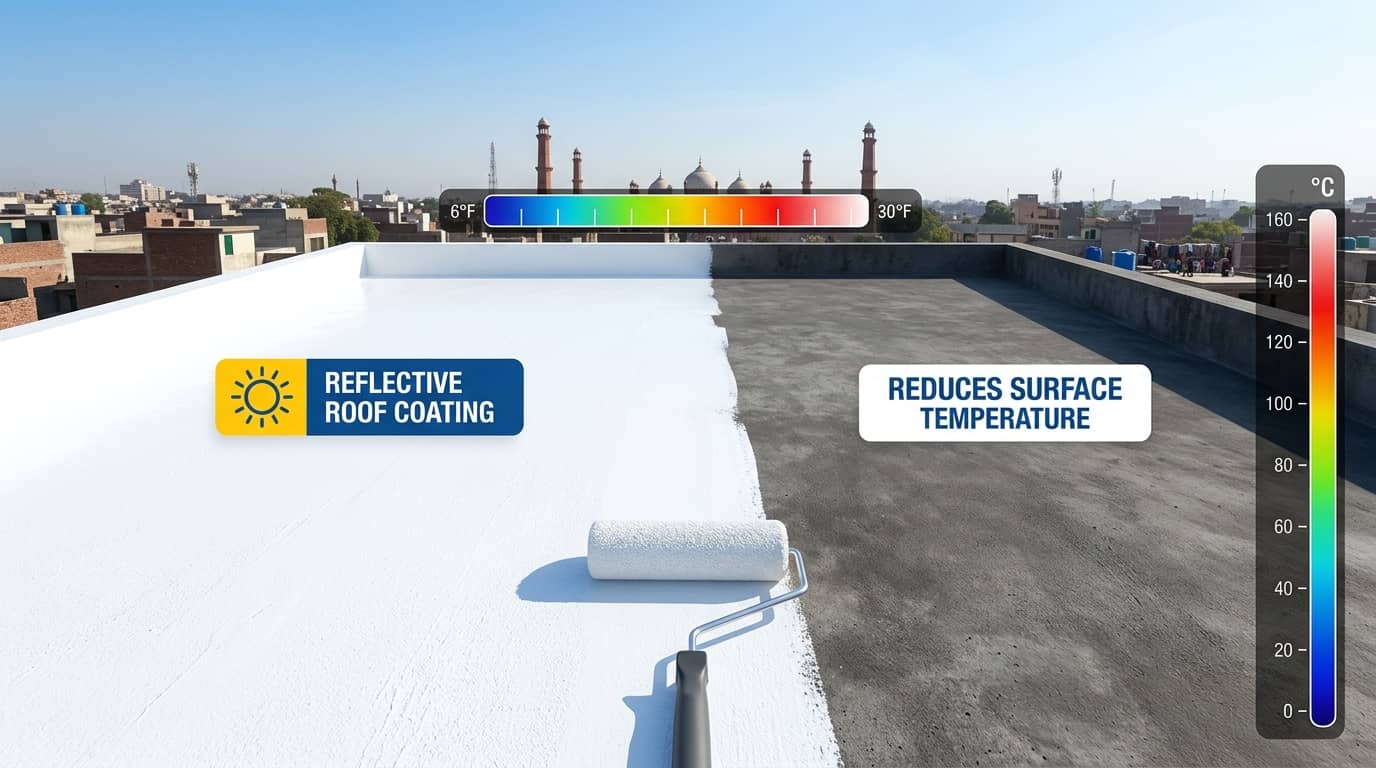
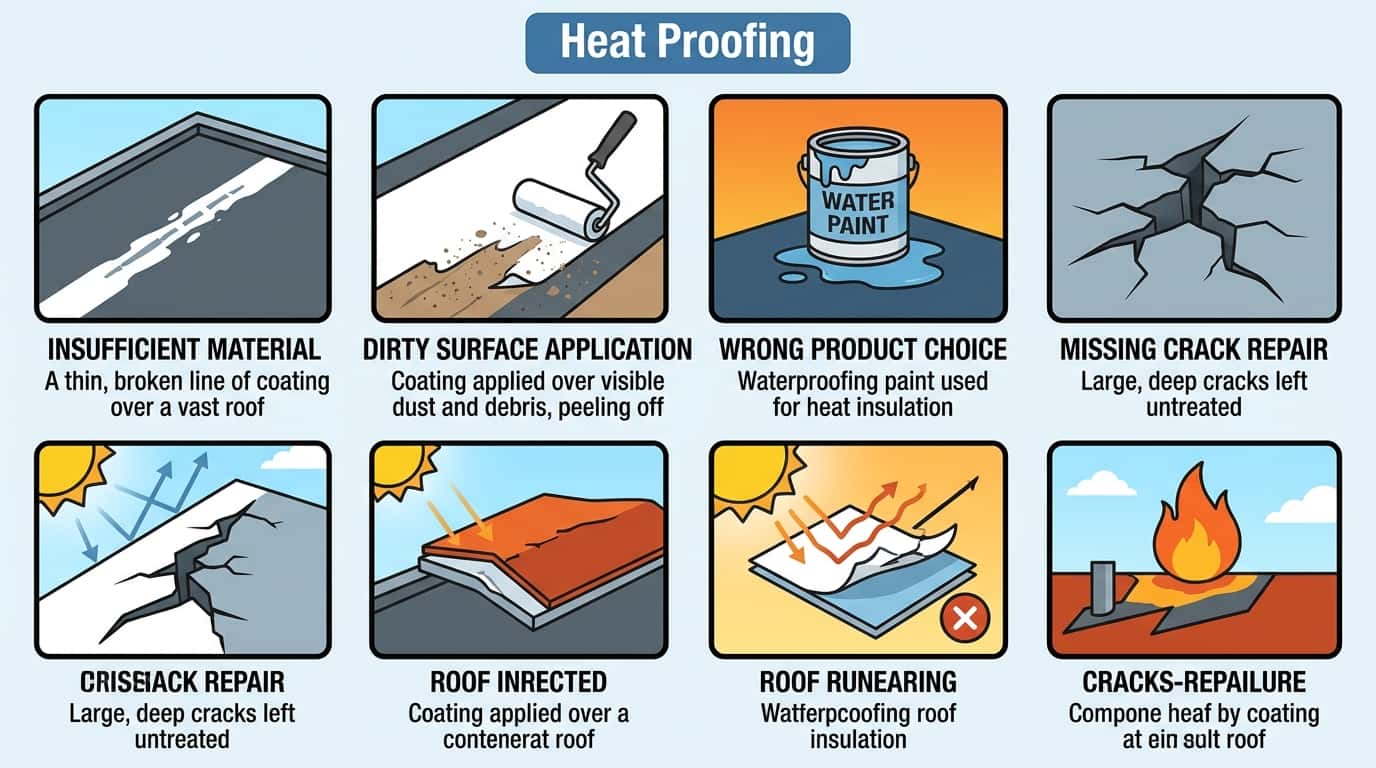
Reflective coating is applied over the existing roof surface, and its performance depends entirely on proper adhesion and even coverage. Coating applied over a dirty, dusty, or previously peeling surface won't bond properly and won't perform to its stated reflectivity specification, visually it may look applied, but its actual heat-reflective performance can be meaningfully compromised from day one.
What "proper preparation" actually means: a genuinely clean surface (free of dust, algae, and loose debris), any existing cracks repaired before coating begins, and, for previously painted or coated surfaces, removal of any peeling or flaking old material rather than coating directly over it.
Why this specific mistake is easy to miss: the roof can look fine immediately after application, since fresh coating covers surface imperfections visually even when it hasn't bonded properly underneath. The performance gap only becomes apparent once summer heat actually tests the coating, by which point the labour cost has already been spent.
Mistake #2: Skipping the Drying Time Between Coats
Standard practice for quality reflective coatings is to allow 24-48 hours drying time between coating layers. Rushing this, applying a second coat before the first has properly cured, compromises the finished coating's structural integrity and its actual reflective performance, even though the total material used might be identical to a properly timed application.
Why this happens in practice: time pressure, either from the installer wanting to finish the job faster or the homeowner wanting the roof back in use sooner, leads to shortened drying windows. The visual result can look complete either way, making this mistake genuinely difficult to detect without knowing to specifically ask about drying time during the original application.
The fix: confirm with your installer (or, if DIY, commit to yourself) that the manufacturer's stated drying time between coats is followed exactly, even if it means the project takes an extra day or two longer than initially planned.
Mistake #3: Treating Coating as a Complete Solution When Insulation Was Actually Needed
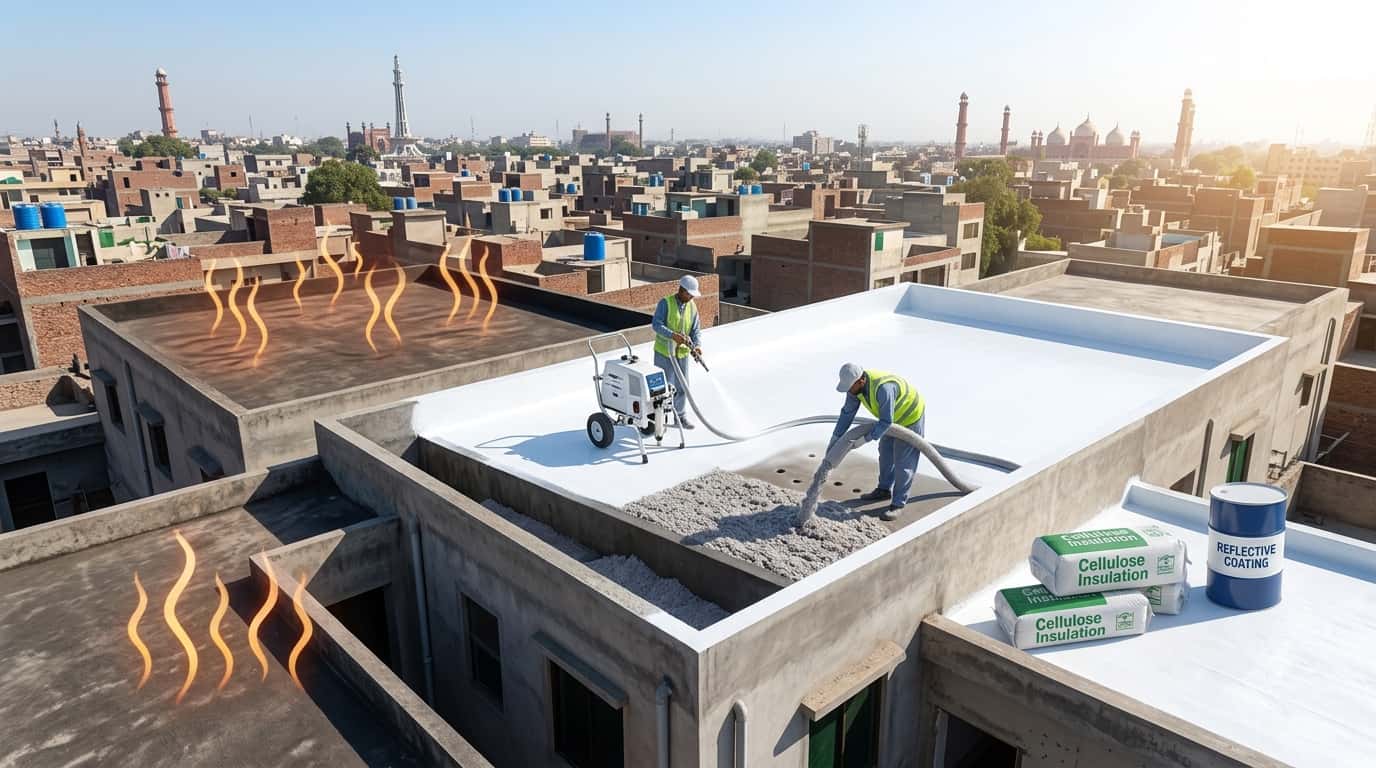
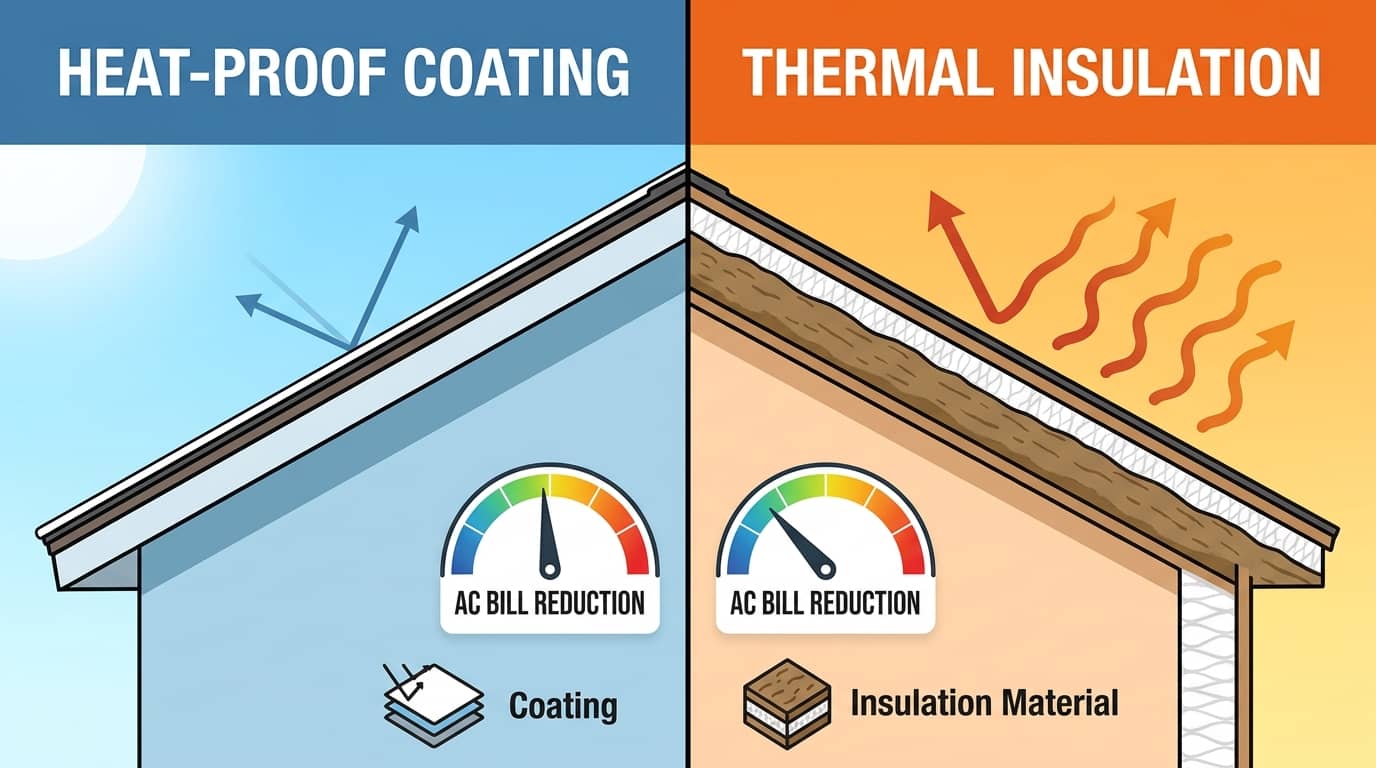
This is less a technical application error and more a mismatched-expectations mistake, but it's the one that generates the most disappointed "it didn't work" feedback. Reflective coating reduces surface heat absorption, it does not create the physical thermal barrier that blocks heat conduction the way thermocol sheet or PU foam spray insulation does.
Where this goes wrong in practice: a homeowner with a genuinely severe roof heat problem applies coating alone, expecting insulation-level results, and is disappointed when the improvement, while real, doesn't fully solve the problem. The coating did exactly what coating does; the mismatch was in expecting it to do what only physical insulation can do.
The fix: be honest about your roof's actual heat severity before choosing a method. For genuinely hot rooms directly under an exposed roof, the combined coating-plus-insulation approach (covered in full on our Roof Heat Proofing guide) delivers results that coating alone was never going to achieve, regardless of how well the coating itself was applied.
How to Verify Your Own Roof Heat Proofing Was Done Correctly
If you've already had roof heat proofing done and results are underwhelming, check these three things before assuming the product itself failed:
Have questions about this?
Chat with us on WhatsApp. We usually reply within minutes.
- Was the surface properly prepared before coating (clean, dry, cracks repaired, old peeling material removed)?
- Was the manufacturer's stated drying time between coats actually followed?
- Was coating alone genuinely sufficient for your roof's heat severity, or did the situation actually call for combined insulation?
If the answer to any of these reveals a gap, that's likely explaining the disappointing result, not a fundamental flaw in reflective coating as a category.
Related Guides
- Roof Heat Proofing, Full Guide
- Roof Cooling Paint in Pakistan
- Chemical Coating vs Physical Insulation
- Why Lahore Roofs Need Heat Proofing More
- Thermocol/EPS Sheet
Frequently Asked Questions
Q1: Why doesn't my roof feel cooler after getting heat proofing done? The three most common explanations are: the surface wasn't properly prepared before coating application (compromising adhesion and performance), the manufacturer's recommended drying time between coats wasn't followed, or coating alone was applied when your roof's heat severity genuinely required combined coating-plus-insulation treatment. Check these three factors before assuming the product itself was defective.
Q2: Does surface preparation really matter that much for roof coating performance? Yes, significantly, coating applied over a dirty, dusty, or previously peeling surface won't bond properly and can underperform its stated reflectivity specification, even though it may look visually complete immediately after application. Proper preparation (clean surface, repaired cracks, removed old flaking material) is a genuine prerequisite for the coating to perform as intended.
Q3: What happens if drying time between coats is rushed? Applying a second coat before the first has properly cured (standard guidance is 24-48 hours) compromises the finished coating's structural integrity and reflective performance, even if the same total amount of material was used. This mistake is difficult to detect visually, since a rushed application can look complete despite underlying performance issues.
Q4: Is it my fault if I chose coating alone and it didn't fully solve my heat problem? Not exactly a fault, but a mismatch of expectations, coating genuinely reduces surface heat absorption, but it doesn't create the physical thermal barrier that blocks conduction the way thermocol sheet or PU foam spray does. For severe roof heat problems, coating alone was never going to deliver insulation-level results regardless of application quality.
Q5: How can I check if my previous roof heat proofing was actually done correctly? Check three things: whether the surface was properly prepared before coating (clean, cracks repaired, old peeling material removed), whether manufacturer-stated drying time between coats was followed, and whether coating alone was genuinely sufficient for your roof's heat severity or whether combined insulation was actually needed. A gap in any of these likely explains disappointing results.
Q6: Can a poorly applied coating be fixed, or does it need full reapplication? This depends on the specific issue, coating applied over an unprepared surface generally needs the old coating removed and the surface properly prepared before reapplication for genuine improvement. Rushed drying time issues may sometimes be addressed with an additional properly-timed coat over the existing one, though results vary by how compromised the original application was.
Q7: How do I avoid these mistakes if I'm hiring a professional for roof heat proofing? Ask directly about their surface preparation process before application begins, confirm they follow manufacturer-stated drying times between coats rather than rushing for faster job completion, and be honest with them about your roof's actual heat severity so they can recommend coating alone versus a combined coating-plus-insulation approach rather than defaulting to whichever is easier to sell.
Have questions about this?
Chat with us on WhatsApp. We usually reply within minutes.